Enjoying the read? Get a new free Elias Vance story in your inbox every month — no spam, unsubscribe anytime.
The house made a new sound on a Tuesday afternoon in late October, and I noticed it the way I notice everything: with the part of my mind that never stops filing, never stops labeling, never stops pressing the world between sheets of acid-free paper to keep it from yellowing.
I was in the living room, cataloging the photographs on the mantel. The silver frame from David’s parents’ wedding, heavier than it looked, cold against my palms. The one of the children at the lake, Chloe’s swimsuit a slash of red against gray water. The one of David and me in front of the house the day we moved in, our smiles wide and uncomplicated, his hand on my shoulder with a weight I could no longer feel. The lemon polish I’d used on the coffee table hung in the air, sharp and clean, the smell of a house trying to present itself well.
The sound came from somewhere behind the wall to my left. A low thrum, barely there, like a refrigerator running in a distant room. I set the frame down and listened. It was steady, unvarying, the kind of sound that lives under the threshold of attention until a quiet afternoon pulls it up into the light.
Keep reading
This story continues. One subscription — $6.99/month — opens every story in full: 39 live today, new ones added monthly, plus the six-voice audiobook.
I checked the kitchen first. The new refrigerator, a stainless steel monument to efficiency, hummed its own familiar tune, a higher pitch, a different rhythm. I pressed my palm against its side and felt the motor’s vibration, but it was not the same. The dishwasher sat silent, its cycle long finished. The boiler in the utility closet breathed its usual intermittent sigh. None of them matched.
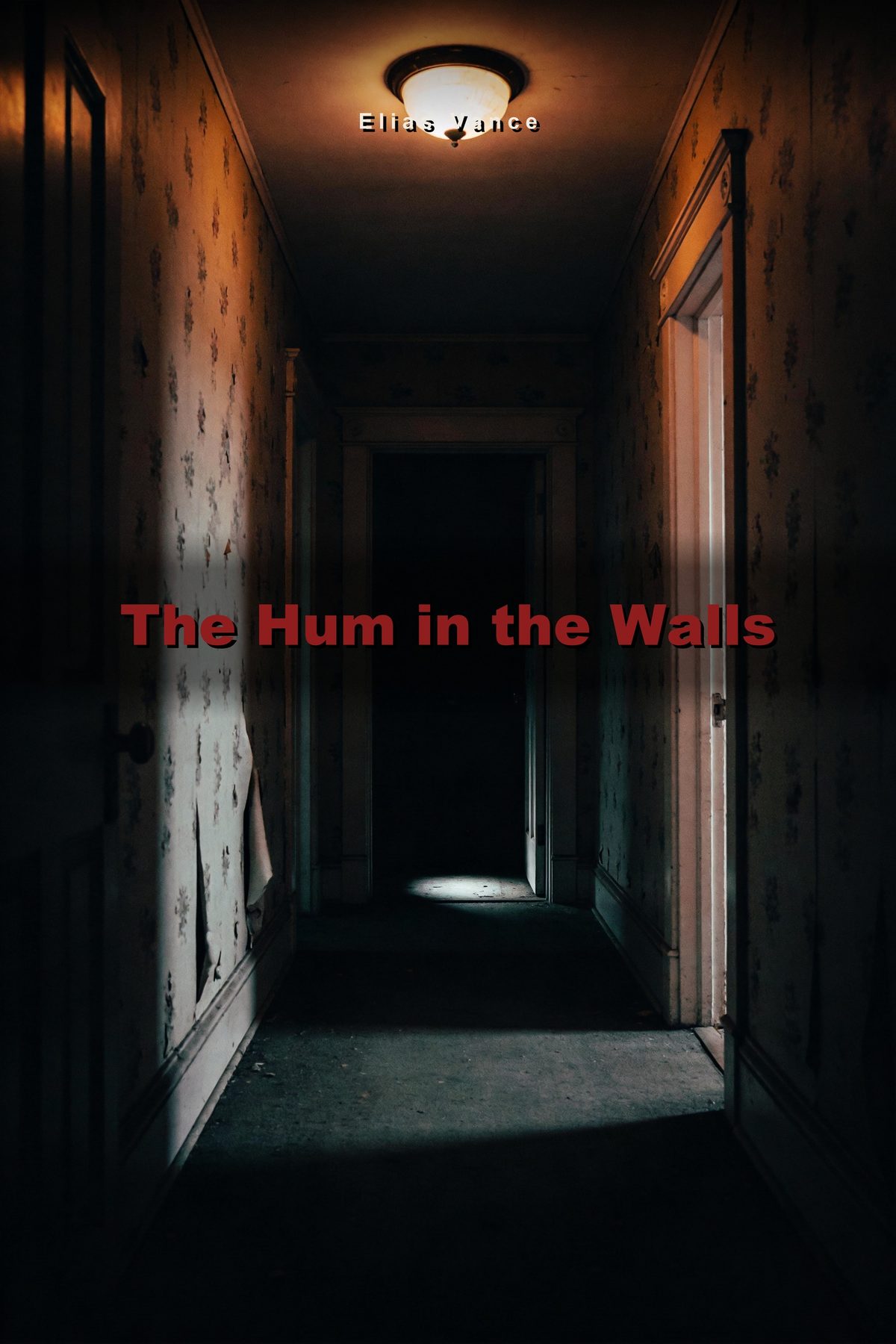
I walked the first floor slowly, tilting my head the way my mother used to tilt hers when she heard something the rest of us didn’t, in the years before the dementia took her hearing and then everything else. The hum was strongest in the hallway between the living room and the stairs, a place I passed forty times a day without stopping. It came from the wall itself, or from inside it, or from behind it. A patient sound. Not loud enough to disturb, but present enough to be measured once you knew it was there.
The children were at school. David was at the office. I stood in the hallway in my bare feet, the floorboards cool under my soles, and listened to the house making a sound I could not explain. I thought about calling someone, then didn’t. I thought about the way my mother used to call the electrician for sounds that turned out to be wind, for smells that turned out to be memory, for shadows that turned out to be her own reflection. I would not be her.
The hum was a fact, like dust. Like the fine gray film that settles on the top of picture frames no matter how often you wipe them. I decided it was the house settling, the bones of the place shifting as the weather turned, and I went back to my photographs. But the sound stayed with me, a new entry in the catalog of the house, and I caught myself listening for it even as I dusted the glass over our smiling faces.
That night I heard it again. The house was quiet, the children asleep, David reading in his study with the door half closed. I stood in the hallway in the dark, my nightgown brushing my ankles, and the hum was there, waiting. It seemed to come from the wall behind the coat closet, a spot I had never touched, a stretch of plaster I had never even looked at closely. I pressed my ear against the wall, and the hum was warm, faintly, the way a wall is warm near a working chimney.
I pulled away. The sound continued, steady and low, and I had the sense, sudden and unwelcome, that it had been there for a long time. That I had simply not been listening. That the house had been speaking for years, and I had been too busy cataloging its surfaces to hear its interior.
I went to bed. David came in later, his weight settling the mattress, his breathing evening into sleep. The hum was quieter in the bedroom, but I could still feel it, a vibration in the floor, in the bedframe, in the bones of my jaw. I lay awake for a long time, listening, and the hum listened back. A patient listener, I thought, and the phrase stayed with me, and I did not know why it frightened me.
The next day I started a notebook.
It was a small thing, a spiral-bound notebook I’d bought for the children’s school lists and never used. I wrote the date at the top of the first page, then I walked the house, room by room, and marked what I heard. The living room: faint. The kitchen: faint, masked by the refrigerator. The hallway: strong. The stairs: moderate, increasing as I climbed. The children’s rooms: weak, barely audible, as if the sound avoided them. The master bedroom: faint. The bathroom: silent. David’s study: strongest of all, a thrum I could feel in my teeth when I stood near the wall behind his armchair.
I wrote it all down in my small, precise handwriting, the handwriting of an archivist, each letter formed with care. I did not know what I was doing. I only knew that I was doing something, that the act of notation made the sound manageable, made it a problem to be solved rather than a presence to be endured.
That night I walked the house barefoot, after everyone was asleep. The floorboards were cold, and the hum was a guide, a thread I could follow from room to room. In the hallway it was a steady pressure, a hand laid flat against the air. In David’s study it was a pulse, a living thing, and I stood outside the door for a long time, my palm flat against the wood, feeling the vibration travel up my arm.
I did not open the door. I was not ready to see what was inside.
David had changed. I noticed it the way I notice everything, in small increments, in details that seemed to mean nothing until they accumulated into something. He had started tilting his head, a slight angle, as if listening to something just beyond the range of my hearing. He did it at dinner, mid-conversation, his fork paused halfway to his mouth. He did it in the living room, reading, his eyes lifting from the page to focus on the wall behind me. He did it in bed, in the dark, his head turning on the pillow toward the window, toward the hallway, toward the sound I could hear and he could not.
I asked him one evening, while he was washing dishes and I was drying. The children were upstairs, their footsteps a distant rhythm on the ceiling.
“Do you hear a hum?” I asked. “In the house. A low sound, like a motor running behind the walls.”
He did not look at me. His hands continued their work, the sponge moving in slow circles over a plate.
“I don’t hear anything,” he said.
The silence after his answer was too long. It stretched between us, filled with the sound of water running, the clink of dishes, the distant footsteps of our children. I watched his hands, the way they moved, the careful, deliberate motion of the sponge. He had never washed dishes this way before. He used to be quick, efficient, stacking the plates with a clatter. Now he was slow, methodical, as if each dish required his full attention.
“Maybe it’s the pipes,” I said.
“Maybe,” he said.
I finished drying the plate in my hands and set it in the cupboard. When I turned back, he was looking at me, his head tilted at that new angle, his eyes soft and unfocused. He smiled, and the smile was the same smile he had given me for twenty years, but something behind it had shifted, something I could not name.
That night I found a single white hair on his sweater, long and fine, caught in the wool like a thread of spider silk. His hair is dark, almost black, and he is only forty-six. I held the hair up to the light, and it gleamed, silver-white, and I thought of his mother, a woman I never met, who died when he was nineteen. He had told me once that she had a quiet way about her. That she could sit for hours without speaking, and it was not uncomfortable, it was not cold, it was simply her way of being in the world.
I put the hair in the notebook, pressed between two pages, and I did not tell him I had found it.
The hum began to change.
It was no longer a steady thrum, a constant note. It developed a rhythm, a two-beat pulse, like a heart, like a breath, like the sound of feet on a wooden floor. I noticed it first in the hallway, the familiar lub-dub, lub-dub, and I stood still, my hand on the banister, listening. The rhythm was not my own heartbeat. It was slower, steadier, and it matched the rhythm of David’s footsteps as he walked from his study to the bathroom, the measured tread of a man who has nowhere urgent to be.
I began to listen for it everywhere. At dinner, the pulse synced with the tapping of his fingers on the table, a small, unconscious gesture he had developed in the past months. In bed, it matched his breathing, the rise and fall of his chest under the sheets. In the morning, it was the rhythm of his spoon stirring his coffee, slow circles, two beats, two beats, two beats.
The children did not notice. Chloe talked about her science project, her voice bright and fast. Michael pushed his food around his plate and asked to be excused. They did not hear the hum, and they did not see their father tilting his head, listening to something that was not there. They did not see the way he held his fork now, the tines down, the handle resting against his palm, a grip I had never seen him use in twenty years of meals.
I watched him eat, the careful way he chewed, the way he cut his meat into small, precise pieces, and I realized he had changed how he held his fork. It was a small thing, an adjustment so minor that no one else would notice. But I noticed. I noticed everything.
The hum now sounded like a voice trying to form words. It was not words, not yet, but it had the shape of language, the rise and fall of a sentence being spoken just beyond hearing. I began to stay up after David slept, sitting on the floor in the hallway, my back against the wall, listening. The house was dark, the children breathing softly in their rooms, and the hum was a presence, a companion, a thing that knew I was there.
I sat for hours, my legs growing cold, my eyes adjusting to the dark. The hum pulsed against my spine, and I listened, and I waited. I did not know what I was waiting for. I only knew that the sound was no longer something to be solved. It was something to be understood.
One night, very late, when the house was so quiet I could hear the ticking of the clock in the kitchen, I heard it. My own name. Faint, almost inaudible, but unmistakable. A voice in the hum, saying my name.
I sat very still, my heart beating fast, my hands pressed flat against the floor. The hum continued, steady, rhythmic, and the voice was gone. But I had heard it. I knew I had heard it.
I did not move for a long time. Then I got up, slowly, my legs stiff and cold, and went to bed. David was asleep, his breathing even, his face peaceful. I lay beside him, listening to the hum, and I thought about my mother, who heard voices in the last years, who called me by my sister’s name, who forgot who I was. I thought about the white hair in my notebook, pressed between pages like a specimen.
I did not sleep.
I lay in the dark with the hum threading through the plaster, through the mattress, through the bones of my jaw. The sound had stopped being a sound. It had become a texture, a grain in the air, like the nap of velvet brushed one way and then the other. David slept with his back to me, one hand curled on the pillow beside his head, and his breathing kept its own time, a counterpoint to the two-beat pulse that ran beneath everything now. I matched my breathing to his. Inhale, exhale, and underneath, the soft double knock of the hum, patient as a heart.
The bedroom window held the streetlight through the gap in the curtains, a slice of orange that fell across the foot of the bed. I watched it for hours, or what felt like hours, the way the light thinned and thickened as the trees outside moved. There was no wind. The trees moved anyway. I catalogued the shadows on the ceiling, the crack that ran from the light fixture to the corner, the water stain shaped like a hand. I had lived in this house for eleven years and I had never noticed the hand. Now I could not unsee it. The fingers spread toward the closet door. The hum gathered in that corner, denser, and I turned my face into the pillow, and the pillow smelled of David's shampoo, the one with the cedar label, and beneath it something else, something mineral and warm, like stones left in the sun.
At 3:17 by the clock on the nightstand I got up. The floor was cold on the soles of my feet, a shock that traveled up my shins and settled in my teeth. I moved through the house without turning on lights. I knew the path by heart: the creak of the third board outside the children's room, the slight dip in the hallway where the foundation had settled, the cool brass of the study doorknob. I had walked this house at night for weeks now, a cartographer of the dark, and the house had begun to feel less like a house and more like a body I was learning from the inside.
The study door opened without sound. David's armchair sat in the corner, the leather worn at the headrest, the ottoman scuffed where his heels rested. The hum was strongest here. I pressed my palm against the wall behind the chair and felt the vibration travel up my arm, a low electrical purr that made my teeth ache. The wall was warm. Not warm from the house's heating, but warm like a living thing, warm like the flank of an animal. I left my hand there longer than I meant to. The hum seemed to lean into my touch, and I thought of the way a cat presses its head into an offered hand, and then I pulled away, because the thought was wrong, because the hum was not a cat, was not anything I could name.
On the floor beside the chair, half under the ottoman, lay a book I did not recognize. A small black notebook, the spine cracked, the pages fanned. I knelt. The hum shifted, seemed to rise a pitch, and I picked up the notebook with two fingers, the way I would pick up something dead. The cover was soft, cloth-bound, unmarked. I opened it to the middle. The pages were filled with handwriting I did not know, a cramped, sloping script that pressed hard into the paper, the letters leaning left. I read a line: the house remembers what the body forgets. I read another: the voice comes through the wall at the hour of the wolf. The ink was blue, the kind from a fountain pen, and in places the letters blurred as if water had fallen on the page. I closed the notebook. I put it back exactly where I had found it, half under the ottoman, and I smoothed the carpet around it with my fingers, erasing the marks of my knees.
The hum dropped back to its usual register, and I understood that I was not meant to have seen the notebook, or that I was meant to have seen it and to pretend I had not. The distinction mattered, though I could not say why. I stood. The room smelled of paper and dust and something else, something sharp and green, like crushed leaves. David's desk held a mug of cold coffee, a pen with a chewed cap, a stack of bills. Nothing out of place. Everything out of place.
I went back to bed. David had turned onto his back, one arm flung across my side of the mattress. His face was slack, his mouth slightly open, and in the orange light from the window he looked younger, or older, I could not decide. I had married him for his steadiness, for the way he carried himself through the world like a man who had never been surprised. Now I watched his lips move in sleep, forming words I could not hear, and I thought of the notebook under the ottoman, the blue ink, the left-leaning letters. I did not know his handwriting. I realized I had never seen it. Eleven years, two children, a mortgage, a shared checking account, and I had never once seen my husband's handwriting. The hum pulsed twice, soft, almost tender, and I lay down beside him without touching him, and I kept my eyes open until the light in the window turned gray.
In the morning the house was ordinary. The children ate cereal at the kitchen island, their spoons clinking against the bowls, their voices a bright, meaningless music. Claire wanted a new backpack. Thomas had a science project due. I poured coffee and packed lunches and answered in the right places, and all the while the hum ran beneath everything, a bass note under the clatter of the morning. I watched David over the rim of my mug. He buttered toast with the same careful strokes he had used for eleven years, and when he caught me looking he smiled, and the smile was the same, and I smiled back, and the hum flared and settled.
He left at 8:15. The children left at 8:30. I stood at the sink with the water running, watching the school bus pull away, and then I turned off the water and listened. The hum was there, waiting, a low constant like the sea held in a shell. I dried my hands on a towel. I went to the hall closet and took out my notebook, the one with the pale green cover, and I opened it to the page where I had pressed the white hair between two pieces of tape. The hair was still there, fine and translucent, curving like a question mark. I had found it on David's sweater six days ago. I had not asked him about it. I had not asked him about the way he paused mid-sentence, head tilted, as if catching a distant radio signal. I had not asked him about the fork.
The fork. He had changed how he held his fork. I had watched him at dinner for three nights running, the tines turned down instead of up, the handle braced against his palm in a grip that looked uncomfortable, wrong. He cut his meat with the knife in his left hand now, though he was right-handed. When I asked him about it, he looked at his hands as if seeing them for the first time, and then he laughed, a short, dry sound, and said he had always held his fork that way. He had not. I had eleven years of meals to prove it. But I said nothing, because the hum had risen when he laughed, and I felt it in my chest, a pressure like a second heartbeat, and I was afraid that if I pushed, the pressure would become something else, something I would have to name.
I spent the morning in the basement. The stairs were narrow, the wood soft with age, and the air grew cooler as I descended. The basement was unfinished, a warren of boxes and old furniture and the ghosts of projects abandoned. The washer and dryer stood against the far wall, and the furnace crouched in the corner, its pilot light a small blue eye. The hum was different here. It did not come from the walls; it came from the floor, from the concrete itself, rising through the soles of my shoes. I walked the perimeter slowly, my hand trailing along the cinder block, feeling for the source. The wall was cold. The floor was cold. But behind the furnace, in the corner where the shelves held jars of nails and old paint cans, there was a brick that did not match the others.
I knew this basement. I had organized it twice, labeled the boxes, swept the floor. I had never noticed the brick. It was set slightly proud of the wall, its edges rough, its color a shade lighter than the surrounding blocks. I knelt. The hum was a roar now, or not a roar, but a fullness, a pressure that made my ears pop. I worked my fingers into the gap around the brick and pulled. It came loose with a sound like a sigh, and behind it was a hollow, and in the hollow was a stone.
The stone was small, smooth, gray, the size of a robin's egg. I picked it up. It was warm. Not warm from the furnace, but warm from within, a steady, living heat that pulsed against my palm in a rhythm I knew. The hum stopped.
The silence was absolute. I had not heard true silence in weeks, and it hit me like a blow, a vacuum that pressed against my eardrums. I knelt there in the basement with the stone in my hand and the silence roaring around me, and I could hear my own blood moving, the creak of my joints, the small wet sounds of my body. I could hear the furnace click and the water in the pipes and the distant, muffled sound of a car passing on the street. I could hear everything. The absence of the hum was louder than the hum had ever been.
I put the stone in my pocket. I replaced the brick. I went upstairs on legs that felt borrowed, and the house was a stranger to me, too quiet, too still, every sound sharp and separate. I hid the stone in my sewing box, under the spools of thread, and I closed the lid and stood in the bedroom with my hand on the lid, feeling the warmth through the wood.
David came home at six. I heard the front door open, the jingle of his keys, the thud of his briefcase on the hall table. I came downstairs. He was in the kitchen, making coffee, his back to me. He asked me where I'd been. His voice was the same, but the timbre was off, a half-tone flat, like a recording played at the wrong speed. I said I'd been looking for a book. He nodded. He did not turn around. I watched his hand reach out and touch the wall beside the refrigerator, his fingers tracing a slow circle on the plaster, the same spot where the hum had been strongest, and I felt the stone in my pocket, warm and waiting, and I understood that the stone was not the source. The stone was the key.
I told myself I would put it back.
The stone sat in my sewing box for three days, buried under a tangle of navy thread and the half-finished hem of Lila's school skirt. I did not touch it. I touched it constantly. Each time I passed the box on the shelf in the laundry room, my fingers drifted to the lid, lifted it just enough to feel the warmth seeping through the gaps in the plastic, then closed it again. The house stayed silent. Not the silence of an empty room, but the silence of a held breath, the pause before a phone rings. I found myself straining to hear the hum that wasn't there, and the strain itself became a kind of sound, a pressure in my eardrums, a faint whine that followed me from room to room.
David noticed something. Of course he did. He had always been the one who noticed when I was coming down with a cold before I felt the first sore throat, who could tell from the way I set down my keys whether the day had been long. But this was different. He watched me now with a quiet, patient attention that made my skin prickle, as if I were a specimen he was waiting to see move. At dinner on the second day, he passed me the salt and let his fingers rest against mine a moment too long. His skin was cool, dry, the same as it had always been. I pulled my hand back and knocked over Lila's water glass. The water spread across the tablecloth in a slow, dark bloom. David watched it soak toward his plate and did not move to help.
I started sleeping in the living room. I told him it was because the bedroom felt stuffy, that I needed the air from the window, that my back had been aching. He accepted each excuse with a small nod, the same nod he gave the children when they explained why they hadn't finished their homework. On the third night, I woke on the couch at two in the morning and heard him breathing in the kitchen. I lay still, listening to the rhythm of it, the way it rose and fell with a mechanical evenness. Then I heard the refrigerator door open, the soft suck of the seal breaking, the clink of a glass. He was getting water. A normal thing. I pressed my face into the cushion and waited for the footsteps to go back up the stairs. They didn't. He stood in the kitchen for a long time, and I could hear him humming, a low tuneless vibration that was almost, almost the hum I had removed from the walls.
I went to the basement the next morning.
The brick was where I had left it, loose in the wall, the mortar crumbling around its edges like dry cake. I knelt on the cold concrete and reached into the hollow. My fingers found only dust, a few brittle shards of old insulation, the husk of a dead spider that crumbled at my touch. The space where the stone had rested was empty now, but the bricks around it were warm, warmer than they should have been in a basement that never got sun. I pressed my palm flat against the wall and felt a faint tremor, not a hum exactly, but the memory of one, the way a bell keeps vibrating after the clapper has stopped. I stayed there for a long time, my hand on the warm brick, my knees aching against the floor, and I thought about my mother.
She had forgotten my name first, then my face. The day she looked at me across the hospital bed and asked who I was, I had smiled and said, I'm Elinor, your daughter. She had nodded politely, the way you nod at a stranger who holds a door open, and then she had turned back to the window and said, The trees are very green today. I had wanted to shake her, to press my face into her line of vision and force her to see me. Instead I had sat down in the plastic chair and folded my hands in my lap and said, Yes, they are. I had been so good at being calm. So good at pretending that the loss of her was something I could archive, label, file away.
The stone was the key. I had known it the moment I felt its warmth in my palm, and I knew it now, kneeling in the basement with dust on my knees. But a key opens a door, and I had not yet decided which door I wanted to open. I could put the stone back and let the hum return, let it fill the walls again with its patient, wordless voice. Or I could keep it hidden, keep the silence, and watch David move through the house like a man waiting for something to arrive.
I climbed the stairs slowly, my hand trailing along the banister, feeling the grain of the wood, the small nicks and scratches that had accumulated over years of children's hands and moving boxes. In the kitchen, I washed the dust from my fingers and watched the water run gray into the drain. Through the window, the backyard was bright with late morning sun, the grass overgrown, the bird feeder swaying empty on its wire. I could hear the children in the living room, their voices rising and falling in the elaborate negotiations of a game they had invented. Normal sounds. The sounds of a family.
David came home early that afternoon.
I heard his car in the driveway, the familiar rattle of the engine that needed a new belt, the slam of the driver's door. He came in through the kitchen and set his briefcase on the counter, and I saw him pause, his head tilting slightly, his eyes scanning the room. He was listening. I knew it now with a certainty that made my stomach clench. He was listening for the hum, and he couldn't hear it, and the absence of it was doing something to him, something I couldn't name but could see in the tightness around his mouth, the way his fingers tapped once, twice against his thigh.
You've been cleaning, he said.
I hadn't. The kitchen was exactly as it had been that morning, the breakfast dishes still stacked by the sink, the newspaper open to the crossword I hadn't finished. But I understood that he wasn't talking about the kitchen. He was talking about the house, the air, the silence that I had created by removing the stone. I said, A little.
He nodded and walked past me into the living room. I heard him greet the children, his voice warm and familiar, the voice of the man I had married, the man who had held my hand through two births and my mother's funeral and a hundred small griefs in between. But when I followed him, I saw him standing by the bookshelf, his fingers resting on the spine of a book he had never read, his eyes fixed on the wall behind the couch. The same wall. The one where the hum had been strongest before I took the stone.
That night, I dreamed of the hum. In the dream, it was a river, wide and slow, and I was standing in it up to my waist, the water warm and thick as syrup. The current pushed against me, and I could feel it shaping me, wearing me down like a stone in a streambed. Somewhere on the bank, David was calling my name, but his voice came from the wrong direction, from underwater, from inside my own chest. I woke with my heart beating hard and the taste of iron in my mouth, and I knew I had been grinding my teeth.
I went to the sewing box and took out the stone. It was warm, as always, warmer than my own hand, and in the dark of the laundry room it seemed to pulse with a faint, internal light. I held it to my ear. Nothing. I pressed it to my chest. Nothing. But when I closed my eyes, I could feel it waiting, patient as a listener, patient as a stone that has been hidden in a wall for a long, long time.
David was awake when I came back upstairs. He was sitting at the kitchen table in the dark, his hands folded in front of him, his eyes open and fixed on the doorway where I stood. I clutched the stone against my thigh, hidden in the fold of my robe.
Can't sleep? I asked.
He shook his head. His face was pale in the thin light from the window, the streetlamp casting long shadows across his cheekbones. I sat down across from him, the stone hot against my leg, and for a long moment neither of us spoke. I could hear the clock on the wall, the soft tick of the second hand, and I could hear, beneath it, a faint vibration that might have been the refrigerator or might have been something else entirely.
I've been thinking about my mother, he said.
I waited. He rarely talked about her. She had died when he was twenty, and what little I knew came from a handful of stories, fragments he let slip and then gathered back. I had always imagined her as a quiet woman, a woman who kept her own counsel, and I had wondered, in the early years of our marriage, whether he was looking for that same quiet in me.
She used to listen to the walls, he said. When I was a boy, I'd come downstairs at night and find her with her ear pressed to the plaster, just standing there. I asked her once what she was doing, and she said she was listening to the house settle. But it wasn't the house.
The stone was burning against my leg. I could feel its heat through the terry cloth, a small, insistent warmth that seemed to be spreading up my side, into my ribs, toward my heart. I wanted to ask him what she had been listening to, but the words wouldn't come. I sat there, my hand pressed over the stone, and I watched my husband's face in the dark, the way his eyes had gone distant, the way his mouth moved silently as if he were practicing a phrase he had forgotten.
She said the house had a voice, he said. She said if you listened long enough, you could learn to speak it.
The clock ticked. The refrigerator hummed. I felt the stone pulse against my palm, and I knew, with a clarity that made my breath catch, that I had a choice. I could ask him the next question, the one that would open the door and let in whatever was waiting on the other side. Or I could sit here, silent, and let the moment pass, and go on being the woman who saw everything and said nothing.
I chose the latter.
I loosened my grip on the stone and let my hand fall to my lap. The heat faded slowly, leaving a dull ache in my fingers. David looked at me for a long moment, then stood and walked to the sink. He filled a glass with water and drank it in three long swallows, his back to me, his shoulders squared. When he turned around, his face was smooth and blank, the face of a man who had said too much and was already forgetting he had said it.
I'm going to bed, he said.
I nodded. I listened to his footsteps on the stairs, the familiar creak of the third step, the soft click of the bedroom door. Then I went to the wall behind the couch, the wall where the hum had always been strongest, and I knelt down and pressed my ear to the plaster. I could hear nothing. But I could feel it, the faintest tremor, like a voice buried under layers of paint and drywall, waiting to be called back.
In the morning, I would put the stone back. I knew it then, kneeling in the dark with my cheek against the cool wall. I would put it back because the silence was worse, because the absence of the hum had left a hollow in the house that was filling with something else, something I didn't want to name. I would put it back and I would listen, and I would go on listening, because that was what I did. That was what I had always done.
The wall was warm against my ear. I closed my eyes and waited for the sound to return, and in the long quiet before dawn, I heard it: a low, constant hum, faint as a memory, rising from the plaster like a voice I had taught myself not to hear. And beneath it, almost too soft to catch, the rhythm of a name. My name. Spoken in a voice I knew, a voice I had married, a voice that had learned its music from the walls.
Read Next
If you liked this story, keep going with these from The Dark Threshold.