Feed the Orchard
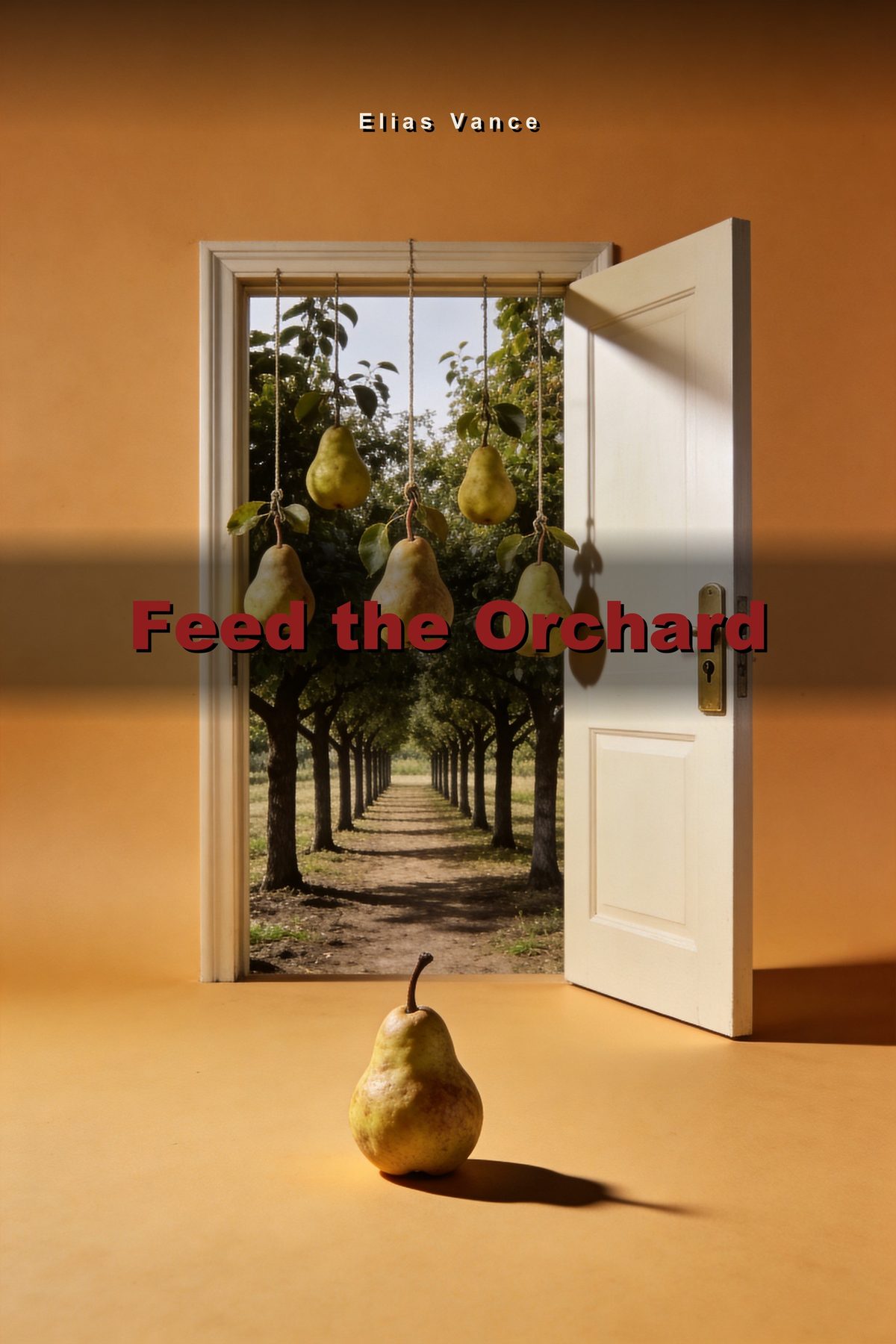
The pears were wrong before I unlocked the door. I could see them from the driveway, hanging low and yellow against a sky that had no business holding that much light in late October. My mother had been dead three weeks. The house key was cold in my hand, and the orchard behind the house was fruiting.
I stood by the car for a while. The air smelled of wet leaves and woodsmoke from somewhere down the road, and under that, a sweetness that did not belong to the season. The pears should have been finished by September. My mother had written me letters about the harvest, years of letters I had opened and answered in the same careful way I answered my clients: with attention, with structure, with nothing of myself. The last letter had arrived two days after the funeral. I had not opened it. It sat now in the glovebox, the envelope already soft at the corners from the heat of the vents.
The house was locked. I used the brass key from the lawyer, the one that stuck in the deadbolt the way it always had when I was a girl, requiring a lift and a jiggle. The door swung in. The air inside was stale but not closed. A window had been left open in the kitchen. My mother had never left windows open. The curtains moved a little, and I could smell the orchard through the screen, that same unseasonable sweetness, thick enough to coat the back of my throat.
I set my bag down on the kitchen table and did not look at the chair where she used to sit. The house was exactly as she had left it, which meant it was exactly as she had kept it for the last twenty years: clean, sparse, deliberate. The clock on the stove blinked 12:00, the way it had after every power outage of my childhood. My mother never reset it. She said the blinking reminded her that time was a convenience, not a fact.
The back door was unlocked. That was wrong too. My mother locked the back door at dusk, every night, without exception. I had watched her do it a thousand times. I had stood in the kitchen in my nightgown, waiting for the click of the deadbolt before I could go to bed, because the orchard at night was not a place I was allowed to think about.
I opened the back door and stepped onto the porch. The boards creaked under my shoes, the same third board from the left that had creaked when I was eighteen and leaving. The orchard spread out before me, twenty or thirty trees in uneven rows, their branches heavy with fruit that should not have been there. The grass between the trees was long, gone to seed, and in the fading light it looked almost silver. The oldest tree stood at the center, a gnarled pear that had been old when my grandfather planted the rest. Its trunk was split low, two main limbs twisting away from each other, and its fruit hung in clusters so dense the branches dipped toward the ground.
I walked out to it. The grass was wet, and the cold seeped through the canvas of my shoes within a few steps. But the ground near the tree was different. I felt the change through the soles of my shoes before I understood what it was: warmth. The soil around the base of the tree was warm, radiating heat through the grass, through my shoes, into the bones of my feet. I stopped and stood still, listening. The orchard was quiet. No birds. No insects. The air had gone still, the way it does before a storm, but there was no storm coming. The sky was clear, the light draining out of it in long amber streaks.
I knelt at the base of the tree. The soil was dark and loose, freshly turned in places, though no one had been here to turn it. I could see the pale roots breaking the surface, thick as my wrist in places, running away from the trunk and then diving back under. The earth between them was warm. Not sun-warm. Warm the way a cup of tea is warm, steady and deliberate, holding its heat long after it should have gone cold.
I do not know why I started to dig. My hands moved before I made a decision. The soil was soft and gave easily, and a few inches down my fingers closed around something small and hard. I pulled it out and brushed the dirt away. A brass key, old and green with patina, small enough to fit a diary lock or a jewelry box. It was warm in my
Subscribe to read the rest of “Feed the Orchard”.
Get every story in the The Dark Threshold collection — and the entire library — for one monthly price. Cancel anytime.