The Sound of Dust Settling
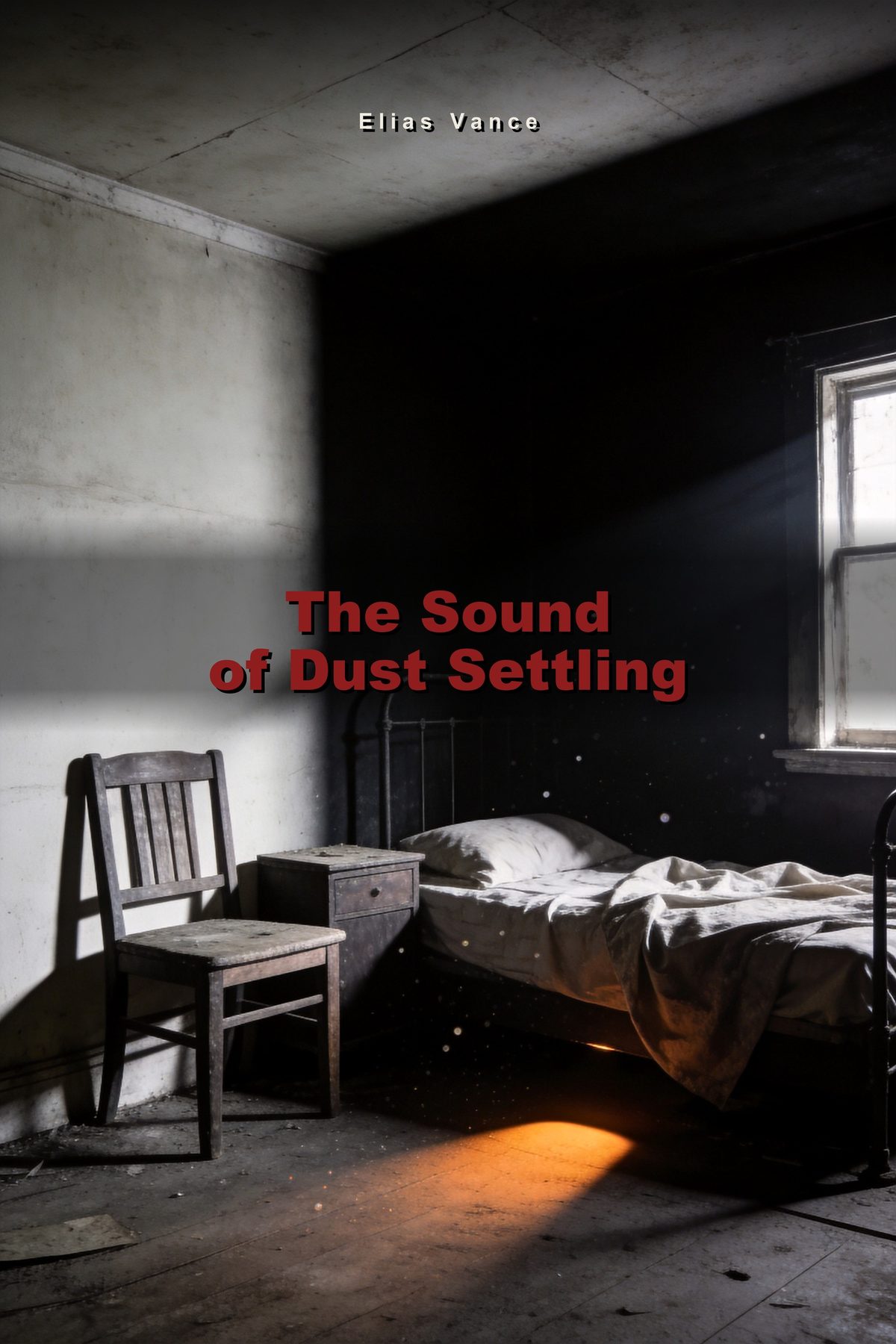
The house held its breath at 7:15 every morning, and Maggie Voss had learned to breathe with it. She stood at the top of the stairs, one hand resting on the banister Paul had refinished the summer they moved in, and she listened. The refrigerator hummed its low note from the kitchen. The clock in the hallway ticked, a sound so familiar it had become a kind of silence. Through the small window at the landing, the gray November light fell across the carpet in a pale rectangle, and inside that rectangle she saw it: a crease, faint but new, running from the wall toward the stair rail, as if something heavy had been dragged across the nap and then the fibers had tried to rise again. She went down three steps and crouched. The crease was no wider than a finger, a shadow of pressure in the wool. She ran her thumb along it. The carpet felt cold, and the crease did not smooth away.
She left it. There was coffee to make, and the rooms to check.
The kitchen she entered without thought, her hand finding the light switch before her eyes adjusted, because forty years in a house teaches the body its geography. She filled the kettle, set it on the burner, and while the water gathered its heat she stood at the counter and looked through the doorway into the hall. From this angle the crease was invisible. The carpet lay flat and gray and ordinary. She turned back to the kettle and watched the steam begin to feather from the spout, and she told herself the crease was a trick of the light, though the light had not moved since she first saw it.
Her morning ritual had not changed in the six months since Paul died. She made her coffee, black, in the blue mug with the chip on the rim that he had always left in the sink, and she carried it through the ground floor, room by room, cataloging. The living room: sofa cushions straight, the afghan folded over the arm, the stack of library books on the side table arranged largest to smallest. The dining room: table bare except for the bowl of wax fruit she had never liked but kept because Paul's mother had given it to them, the dust on the bowl's rim fine and even. The front hall: shoes in the tray, umbrella in the stand, the small brass key in the lock of the front door, turned horizontal, the way Paul had always left it. She did not touch anything. She only looked, and the looking was a kind of caretaking.
The study door was closed.
It was always closed. Paul had kept it closed even when he was inside, the door pulled nearly to the jamb, a habit from years of phone calls and tax documents and the quiet work of a man who needed a room that was only his. After he died, Maggie had gone in once, to find the will. She had opened the door, stepped into the smell of old paper and pipe smoke, and she had stood at the desk for a long time, not touching anything, until the silence grew too heavy and she backed out and pulled the door shut behind her. She had not opened it since. But every morning she stopped outside it, and she looked at the door, and she confirmed that it was closed. The brass knob dull, the paint around the frame unbroken, the keyhole dark. This morning, the door was closed. She stood with her coffee going cold in her hand and she listened at the wood. Nothing. The house held its breath. She moved on.
The stairs she climbed slowly, her left knee complaining on the seventh step, the way it had for a year now. At the top she turned left, toward the bedroom, and she paused at the threshold. The bed was made, the white coverlet pulled smooth, the two pillows in their cases, the one on the right slightly flattened where Paul's head had lain for forty years. She had not washed that pillowcase since he died. She would not wash it. It was a detail no one else would notice, but she noticed it every morning, and the noticing was a small, private act of fidelity.
She dressed in the clothes she had laid out the night before, a gray cardigan over a white blouse, wool trousers, the brown shoes with the soft soles. She brushed her hair, counting the strokes, twenty on each side, and she put in the small pearl earrings Paul had given her on their thirtieth anniversary. In the mirror her face looked back at her, sixty-four years old, the skin at her jaw
Subscribe to read the rest of “The Sound of Dust Settling”.
Get every story in the The Dark Threshold collection — and the entire library — for one monthly price. Cancel anytime.