Enjoying the read? Get a new free Elias Vance story in your inbox every month — no spam, unsubscribe anytime.
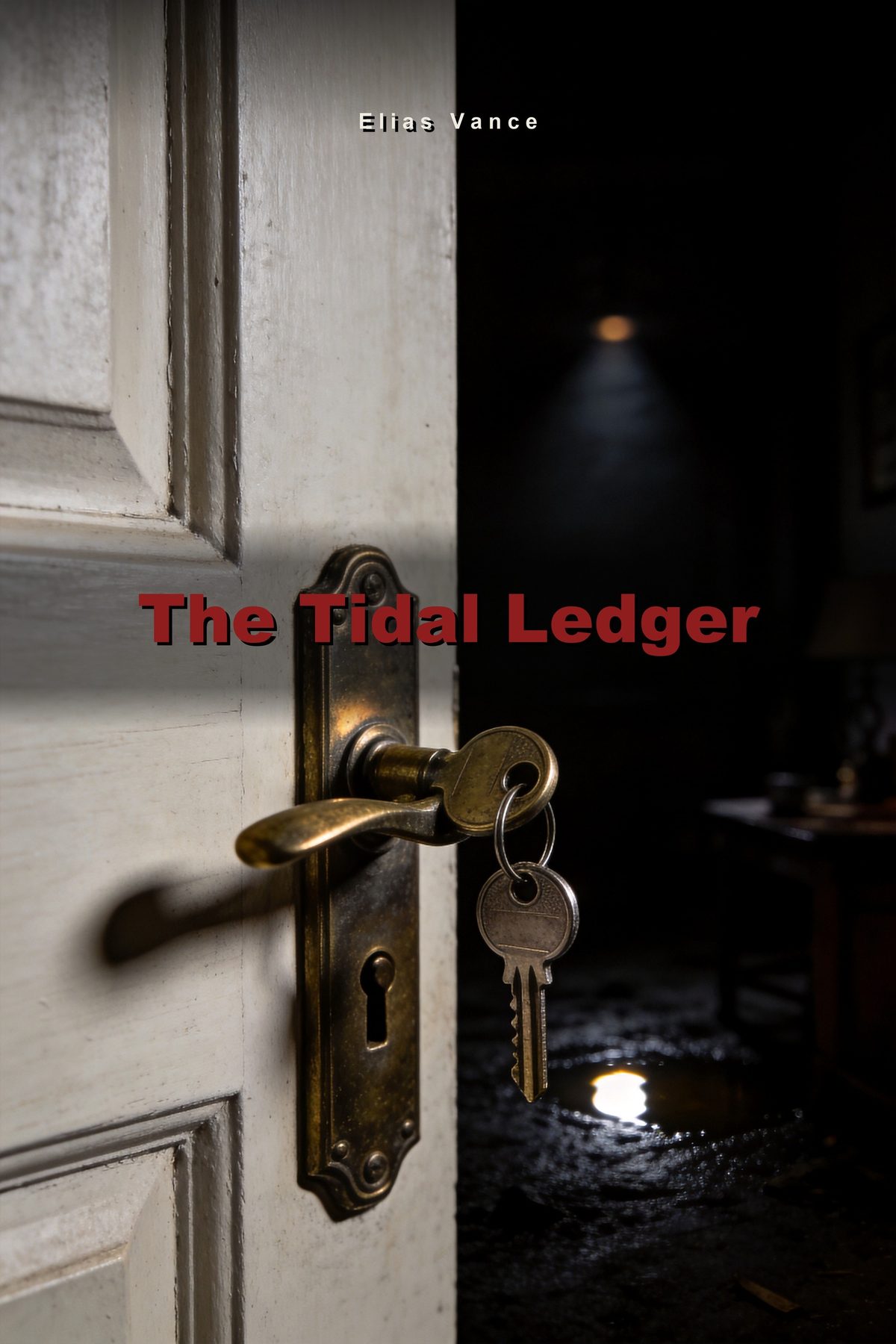
The key turns in the lock with the particular resistance it always has on Tuesday mornings, when the damp has had a full day and night to work on the brass. I push the door with my shoulder, and the Saltmarsh Public Library exhales into my face: old paper, floor wax, the mineral breath of the harbor two streets over. The air inside is cool in a way the air outside is not, and it carries that particular library silence that is not absence of sound but a kind of pressure, a waiting.
I hold the door open for a moment longer than I need to, letting the outside air follow me in. It is May, and the mornings have begun to warm, but the library keeps its own climate, indifferent to the calendar. The floorboards creak under my weight in the same sequence they always creak: first the board by the entrance, then the one three steps in, then the one just before the circulation desk. I have walked this path so many times that my body knows the rhythm without my mind attending to it. Thirty-one years of mornings, thirty-one years of the same key, the same door, the same exhale of old paper and brine.
The light this morning is thin and gray, the kind of light that makes the dust visible in the air, suspended in the still room like the slow fall of something that never quite reaches the floor. I can smell the harbor more strongly than usual, a green and mineral scent that has worked its way into the wood over decades, into the spines of the books, into the wool of the carpet. It is the smell of the town itself, the smell that clings to everything, the smell that tells you, even with your eyes closed, that the sea is near and has always been near and will always be near, patient and indifferent.
Keep reading
This story continues. One subscription — $6.99/month — opens every story in full: 39 live today, new ones added monthly, plus the six-voice audiobook.
I hang my coat on the peg behind the circulation desk, straighten the blotter so its corners align with the desk's edge, and switch on the reading lamps one by one. The switches are old, heavy, and they click with a satisfying finality. The light they cast is warm and yellow, and it pools on the wooden tables in a way that has always reminded me of honey, or of the last light of an October afternoon. The windows along the east wall show the gray light of early morning, and through the glass I can see the gulls already working the tide line, their cries muffled to a distant complaint. Dust has gathered on the windowsill overnight, a fine gray film that I wipe with a cloth I keep in the bottom drawer for this purpose. The cloth comes away darker than it did yesterday. It always does. I fold the cloth into a neat square and return it to the drawer, and I do not think about what the dust is made of, though I know: salt, sand, the dried bodies of tiny creatures, the fine particulate matter of a town that is slowly being ground down by wind and water.
The tide clock on the wall above the reference section reads 7:42. My watch reads 7:44. I make a mental note to adjust the clock, though I have made this same note every morning for the past three weeks and have not yet done it. The clock is a simple thing, a brass ring with a single hand that points to HIGH, RISING, LOW, FALLING, and it has hung in this building longer than I have worked here. The hand trembles slightly as I watch, then settles. The battery must be failing. I will change it tomorrow. I have said this before. I have said it so many times that the words have become a kind of ritual, a small prayer against the erosion of time, and the saying of it is enough, somehow, to put off the doing of it for one more day.
The ledger sits where it always sits, on the slanted shelf beneath the tide clock, bound in green cloth with the year stamped on the spine in gold. This year's volume is already heavy with entries, each one in my hand, each one a record of the harbor's breathing: date, time, height, wind, barometric pressure, the color of the water, the behavior of the gulls. I have kept this ledger since I was twenty-seven years old, when the previous assistant librarian, Mrs. Ellery, handed it to me with the instruction that the sea does not keep its own records, so someone must. She had kept it for forty-two years before me. The entries are a conversation between her hand and mine, a continuous record of the same water, the same tides, the same slow erosion of the shore.
I remember the day she gave it to me. It was a Thursday in October, and the wind had been blowing from the northeast for three days straight, and the harbor was the color of old pewter. Mrs. Ellery had been ill for some time, though she never spoke of it, and on that Thursday she called me into the small office behind the circulation desk and placed the ledger in my hands. The green cloth was worn smooth at the corners, and the pages had swelled slightly with years of salt air. She told me that the sea does not keep its own records, so someone must. She told me that I had the hand for it, steady and precise, and that I would know what to write if I listened. Then she put on her coat and walked out of the library, and I never saw her again. She died that winter, and the library board hired a young woman from the community college to take her position, but the ledger stayed with me. It has stayed with me ever since.
I open the ledger to the current page. The paper makes a sound as I turn it, a soft crackle that is the sound of something old and dry being moved. The pages have yellowed at the edges, and the ink has faded in places, but the entries are all there, all in order, all in my careful hand. May 30, the last entry, is written in my hand, the ink dry and slightly faded. The tide was at 11:47 PM, a high of 9.2 feet, the water flat and black under a moon I could not see. I remember writing it. I remember the pen in my hand, the particular scratch of the nib on the paper, the way the lamplight fell across the page. I remember closing the ledger and turning off the lights. I remember the walk home, the sound of the water against the pilings, the feeling of the day settling into its proper place behind me.
Beneath that entry, on the next line, there is another.
June 31, it reads. Tide: 3:17 AM. Height: 9.8 feet. Wind: none. Water: still.
I stand very still in the quiet of the reading room. The gulls outside have fallen silent, or perhaps I have stopped hearing them. The date is written in my hand. I know my own hand the way I know my own voice, the particular slope of the capital J, the way the 1 in 3:17 leans slightly left. This is my writing. But June has thirty days. It always has. And the ledger is for May. May has thirty-one days, and the last entry is May 30. There is no May 31 entry. There is no June 31, not in any calendar I have ever seen.
I turn the page back, then forward again. The entry remains. The ink is dry. I touch it with the tip of my finger, and the paper is smooth and cool, no different from the other pages, no evidence of erasure or addition. The entry is simply there, as if it has always been there, as if I wrote it and forgot.
But I did not write it. I could not have written it. I was home at 3:17 AM, asleep in my bed, the window open to the sound of the harbor, and I did not wake, and I did not write.
I close the ledger and press my palms flat against its cover. The green cloth is slightly damp. That is not unusual. The salt air gets into everything, no matter how careful I am. But the dampness is cold, colder than the air in the room, and it leaves a faint residue on my skin that smells of low tide, of mud and rotting weed and the secret undersides of stones. The smell is familiar in a way that makes my stomach tighten, a smell I have known since childhood, the smell of the harbor at its lowest ebb, when the water has pulled back to reveal what is usually hidden. I have always disliked that smell, but I have also always been drawn to it, the way one is drawn to the edge of a high place, the pull of something that should be avoided.
I wash my hands in the small sink behind the circulation desk, using the soap I keep there for after I handle the old newspapers. The soap is a plain white bar, and it lathers thinly in the hard water, and the smell of it is faintly medicinal, a smell I have always associated with cleanliness and order. I scrub my palms, my fingers, the spaces between my fingers, the backs of my hands. The smell of the ledger does not entirely come off. It lingers at the edges, under the soap, a green and mineral note that settles into the creases of my knuckles. I dry my hands on a paper towel and stand for a long moment looking at the tide clock, whose hand now reads 8:01. My watch reads 8:03.
The ledger waits on its shelf, closed and green and ordinary. I do not open it again. But I can feel it from across the room, the way you can feel a person watching you, the particular weight of something that has been disturbed and is waiting to be noticed again.
The morning passes in the usual way. Patrons come and go: Mrs. Albright returns a novel and checks out another, a thick paperback with a cracked spine and a cover showing a woman standing on a cliff above a stormy sea; a young man I do not recognize asks for the maritime history section and sits for two hours with a stack of books about shipwrecks, turning the pages slowly, taking notes on a yellow legal pad; a child leaves a trail of cracker crumbs that I sweep up with the small broom I keep behind the desk. The ordinary business of the library continues, and I perform it all with the same attention I have always given it, but underneath the routine there is a current of unease, a sense that something in the room has shifted by a degree too small to name.
The smell from the ledger stays with me through the morning. I catch it at unexpected moments: when I reach for a book on a high shelf, when I bend to pick up a dropped pencil, when I stand at the window looking out at the harbor. It is in my skin, in my clothes, in the air of the library itself, and I wonder if the patrons can smell it too. Mrs. Albright does not seem to notice. The young man with the shipwreck books does not look up. But I notice, and I cannot stop noticing, and the noticing becomes a kind of attention, a vigilance that exhausts me without producing any answers.
At noon I eat my lunch in the small office behind the circulation desk, a sandwich and an apple, and I read the local paper. There is an article about the harbor dredging project, another about the new condominiums planned for the old cannery site. The tide table is printed on the back page, as it is every day. High tide at 11:52 PM, low tide at 5:47 AM. I check these numbers against the ledger's last legitimate entry, and they match. The entry for June 31 matches nothing. The time 3:17 AM is not a high tide, not a low tide, not any tide at all. It is simply a time, floating in the middle of the night, attached to a date that does not exist.
I fold the paper and put it in the recycling bin. The apple core I wrap in a napkin and put in the trash. I wash my hands again, though they are not dirty.
In the afternoon I take down the almanac from the reference shelf, the one with the tide tables for the entire year, and I open it to June. The pages are thin and crackling, and they smell of dust and the particular mustiness of books that are rarely opened. I run my finger down the column of dates. June 1, June 2, June 3. The numbers march down the page in their neat rows. June 28, June 29, June 30. There is no June 31. There has never been a June 31. The almanac does not acknowledge it, and neither does any calendar I have ever seen, and yet the ledger in my library has an entry for it, written in my hand, and I cannot explain it.
I close the almanac and return it to the shelf. The tide clock now reads 2:17. My watch reads 2:19. The discrepancy has not changed. The clock is simply fast, consistently fast, two minutes ahead of the time I know to be correct. I have known this for weeks. I have done nothing about it.
The rest of the afternoon I spend at the circulation desk, checking books in and out, answering questions, performing the small tasks that make up a librarian's day. But my eyes keep drifting to the ledger on its shelf, and every time I look at it, I have the sense that it has moved slightly, that the angle of its spine against the shelf is not quite the same as it was a moment before. This is impossible. I am the only one who touches it. But the sense persists, a low hum at the back of my mind, like the sound of the harbor at night, like the sound of water moving in a place where water should not be.
At five o'clock I close the library. The last patron leaves, and I go through my closing routine: lights off, windows checked, thermostat adjusted, ledger returned to its shelf. I do not open it. I do not want to see what it contains. But I touch its spine as I pass, and the cloth is damp again, and the dampness is cold, and I pull my hand away quickly, as if I have touched something living.
I walk home along the harbor road. The tide is out, and the mudflats gleam in the evening light, gray and ribbed like the roof of a mouth. The gulls are quiet now, settled for the night, and the only sound is the water, the slow suck of it against the pilings, the whisper of it retreating from the shore. I have walked this road a thousand times, ten thousand times, and I know every crack in the pavement, every leaning fence post, every house with its lights on in the kitchen. But tonight the road feels different, as if the fog has come in though the air is clear, as if the familiar shapes have been replaced by something almost identical, something that differs only in ways I cannot quite perceive.
I stop at the small beach where the road curves, the one where the fishermen used to launch their boats. The tide is far out, and the sand is dark with the memory of water. I stand at the edge of the road and look out at the harbor, at the flat gray water and the distant lights of the town on the other side. The water does not move. It is as still as a held breath. And for a moment I have the sense that I am being watched, not by anything in the water, but by the water itself, by the whole gray expanse of it, patient and indifferent and waiting.
I walk the rest of the way home with my hands in my pockets and my eyes on the ground.
The next morning the ledger has another entry.
I open it before I turn on the lights, before I hang up my coat, before I do any of the small rituals that begin my day. I do not know why I do this. Perhaps I want to catch it in the act, to see the ink still wet, to find some evidence of the process by which these entries appear. But the ink is dry. The entry is for June 32. The tide is at 4:02 AM. The height is 9.9 feet. The wind is from the east. The water is gray.
The handwriting is mine. I stare at it for a long time, at the particular way the 4 leans forward, at the way the 2 curls at the bottom. I know this hand. I have written in this ledger for thirty-one years. I have written these same letters, these same numbers, thousands of times. And yet I did not write this. I was asleep at 4:02 AM. I was dreaming, though I cannot remember what I dreamed. I woke at 4:03, according to the clock on my nightstand, and I lay in the dark listening to the harbor, and then I went back to sleep.
The page is damp. I touch it, and the paper gives slightly under my finger, and the dampness spreads, and the smell rises up: salt, mud, the deep organic rot of the harbor floor. I lift my hand to my face and smell my fingers. The smell is there too, and it will not come off, not with soap, not with time.
I look at the tide clock. It reads 8:02. My watch reads 8:04. The clock is still two minutes fast. Or my watch is two minutes slow. I cannot tell which anymore.
That afternoon I take the ledger down from its shelf and carry it to the small table by the east window, where the light is best. I open it to the page with the impossible entries and I study them, line by line, letter by letter. The entries for June 31 and June 32 are written in the same ink, the same blue-black ink I have always used, the same pen I keep in the top drawer of the circulation desk. The pressure of the nib is consistent with my hand. The spacing between letters, the height of the capitals, the angle of the numerals: all mine. If I had not been asleep, if I had not been in my bed at those hours, I would believe I had written them and simply forgotten.
But I do not forget. I have never forgotten an entry. The ledger is my record, my proof that the world can be ordered, that the sea can be made to keep its appointments, that the chaos of water and wind and time can be reduced to columns and rows. I do not forget. I cannot afford to forget.
I close the ledger and press my hands flat on its cover, as I did the first morning. The dampness is still there, and now I notice something else: the dampness is not uniform. It is concentrated in certain areas, in patches that correspond, I realize, to the shape of a hand. My hand. The outline of my own palm, my own fingers, pressed into the cloth like a signature.
I pull my hands away and stand up quickly. The chair scrapes against the floor, and the sound is too loud in the quiet room. The gulls outside are silent. The tide clock ticks, a small mechanical sound, and I can hear that it is ticking too fast, a fraction of a second too fast, a rhythm that is almost but not quite the rhythm of my own heart.
I stay late that night. I tell myself I am catching up on work, shelving the books that have accumulated on the cart, updating the card catalog, performing the small tasks that always need doing. But really I am waiting. I am waiting for something to happen, though I cannot say what. I am waiting for the moment when the library changes, when the thing that has been happening in secret reveals itself to me.
At 9:00 the building settles, as old buildings do, a creak and a sigh that I have heard a thousand times. At 10:00 the last light fades from the windows, and the reading room is lit only by the small lamp on the circulation desk. At 11:00 I put down the book I have been pretending to read and I listen.
The library is never entirely silent. There is always the hum of the refrigerator in the staff room, the tick of the tide clock, the occasional creak of the old radiators. But tonight there is something else, a sound I have never heard before, or perhaps a sound I have heard and never noticed, a sound so low and so constant that it has become part of the background, like the sound of my own breathing.
It is the sound of water. Not the drip of a faucet, not the gurgle of the old pipes. It is the sound of water moving, a slow, rhythmic movement, a swell and a retreat, a wave. It is coming from the ventilation grate near the floor, the one behind the reference section, the one I have never seen open.
I stand up and walk toward the sound. My footsteps are quiet on the carpet, but they seem loud to me, loud enough to disturb whatever is making the sound. The sound does not stop. It continues, steady and patient, and as I get closer I can smell it: the smell of low tide, the smell of mud and rot and the secret undersides of stones, the smell that has been on the ledger, on my hands, on the pages of the almanac.
I kneel down beside the grate. The metal is cold, and when I touch it, my fingers come away damp. The smell is stronger here, and the sound is louder, and I can feel a faint movement of air, a breath from the grate, cool and damp and smelling of the harbor floor. I lean closer. I cannot see anything through the slats, only darkness, but the darkness seems to move, to shift, as if something is there, just beyond the reach of the light.
I stay there for a long time, kneeling on the floor of the library, listening to the sound of the sea moving through the ventilation system. The tide clock ticks behind me, too fast, always too fast. The smell of low tide fills the room, and I breathe it in, and it settles in my lungs, and I know that I will smell it for the rest of my life.
At midnight I go home. I do not look at the ledger. I do not touch it. I turn off the lights and lock the door and walk down the harbor road in the dark, and the smell of the sea follows me, and the sound of the waves follows me, and I do not look back.
The entries continue. Every morning there is a new one, for a date that does not exist, for a time that corresponds to no tide. June 33, June 34, June 35. The times vary: 2:47 AM, 5:13 AM, 1:28 AM. The heights vary: 9.4 feet, 10.1 feet, 8.9 feet. The wind is always from the east, or there is no wind at all. The water is always gray, or black, or still. The handwriting is always mine.
I have stopped trying to explain it. I have stopped comparing the entries to the almanac, stopped checking the tide tables in the newspaper. The entries are records of something else, some other tide, some other water, some other time that runs parallel to the time I know. And I am the one writing them. I must be. There is no other explanation. I am writing them in my sleep, or in some state I do not remember, some state in which I rise from my bed and walk to the library and open the ledger and write down the numbers that come to me from the sea.
But the ink is always dry when I find it. And the pages are always damp. And the smell is always there, in the paper, in the cloth, in the air of the library, in the hollows of my own hands.
One night I decide to test it. I do not know what I expect to find, but I need to know, I need to see, I need to catch the process in the act. I open the ledger to a blank page and I write an entry in my own hand, a deliberate falsehood, a tide that I know did not occur: June 36, 12:00 AM, height 0.0 feet, wind: none, water: absent. I press the pen hard into the paper, harder than I usually do, so that the imprint will remain even if the ink is somehow removed. I leave the ledger open on the table, the page exposed to the air, and I turn off the lights and I go home.
That night I dream. I dream of water, of dark water, of water that moves without wind, of water that rises without tide. I dream of a door that opens onto the sea, and I walk through it, and the water closes over my head, and I do not struggle. I dream of a hand writing in a book, and the hand is my hand, and the book is the ledger, and the words are not words but numbers, and the numbers are not numbers but the secret names of the tides.
I wake at 3:17 AM. The clock on my nightstand reads 3:17, and the room is cold, and the smell of low tide is in the air, and my hands are damp. I lie still in the dark, listening to the harbor, listening to the sound of the water, and I know that something has happened, something has changed, something has been written that cannot be unwritten.
In the morning I go to the library early, before the sun is fully up, before the gulls have begun their crying. The door unlocks with the usual resistance, and the library exhales into my face, and the smell is there, stronger than ever, the smell of the harbor floor, the smell of the secret undersides of stones.
The ledger is open on the table where I left it. The page is blank. My false entry is gone. The paper shows no sign of erasure, no smudge, no indentation from the pen. The page is smooth and clean, as if nothing was ever written there.
But beneath the blank space, on the next line, there is a new entry.
June 37. Tide: 3:17 AM. Height: 10.0 feet. Wind: none. Water: rising.
The handwriting is mine. The ink is wet. It glistens on the page, dark and fresh, and when I touch it, it smears, and the smear is black, and the blackness spreads across the paper like a shadow, like a stain, like the sea itself seeping up through the fibers of the book.
I stand at the table for a long time, looking at the wet ink, at the smear on my finger, at the page that is damp and cold and smelling of the tide. The tide clock on the wall reads 7:58. My watch reads 8:00. The clock is two minutes slow now, or my watch is two minutes fast. I cannot tell. It does not matter. Time has come loose from its moorings, and the ledger is keeping its own record now, and I am the one who writes it, whether I remember or not, whether I choose to or not, whether I am awake or asleep or somewhere in between.
I close the ledger. The cover is cold, and the dampness has spread, and the green cloth is dark with moisture. I stack the almanacs on top of it, as if their weight could hold it down, as if their printed numbers could anchor the ledger to the world I know. Then I turn off the lights and I lock the door and I walk down to the shore.
The tide is out. The mudflats stretch toward the water, ribbed and gray, and the gulls stand in the shallows, motionless, watching. The water is flat and gray, and the sky is flat and gray, and the line between them is soft, uncertain, as if the sea and the sky have begun to merge. I stand at the edge of the road and I look out at the water, and I do not check the tide table. I do not need to. The pull is in my chest, a rhythm I have always known, a tide that rises and falls in time with something I cannot see.
The ledger will be waiting for me tomorrow. There will be a new entry, in my hand, for a date that does not exist, for a tide that will not occur in any harbor I know. And I will not be able to stop myself from writing it. The ink will be wet, and the page will be damp, and the smell of the sea will rise from the paper like a breath.
I turn away from the water and walk home along the harbor road. The gulls are silent. The tide is turning. And behind me, in the empty library, the tide clock ticks on, too fast, too slow, marking a time that belongs to no calendar, a time that exists only in the ledger, in the wet ink, in the hand that writes without knowing.
Read Next
If you liked this story, keep going with these from The Dark Threshold.