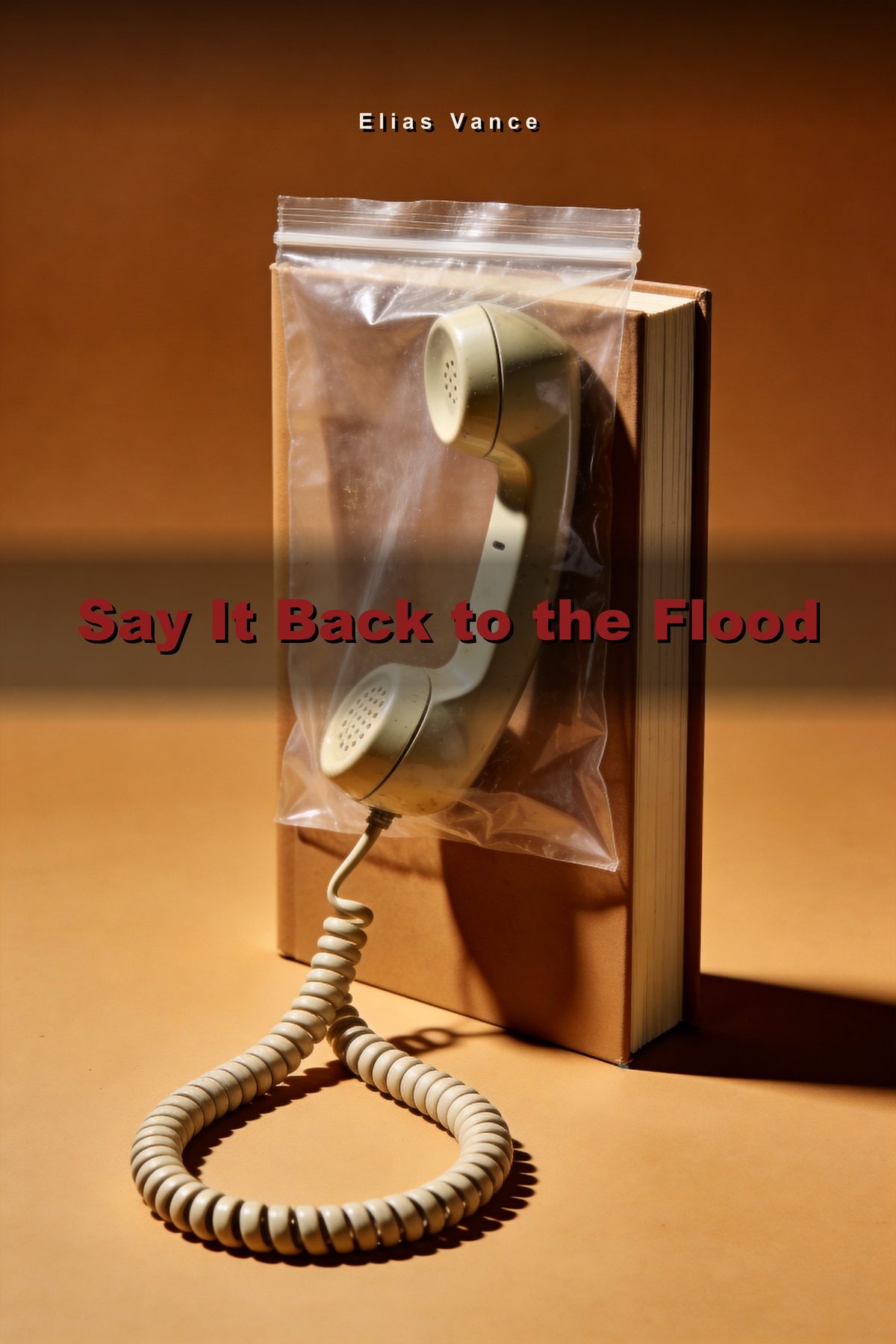
Say It Back to the Flood
The phone came up in a zip bag marked CASE 1147-B, apartment 3C, 2140 Sable Street. I set it on the archive bench, unsealed the bag, and lifted the device out with two fingers. Water had gotten into the charging port and dried there, leaving a rime of pale mineral around the contacts. The screen had a crack running from the lower left corner to the speaker grille. I photographed it front and back, logged the IMEI, and connected it to the bench supply at 3.7 volts before I touched the power button.
The screen flickered once. The boot logo hung, then resolved into a lock screen with a photograph of a dog asleep on a tile floor. I noted the time and date stamp on the photo. The phone had been in the water for nine days before recovery pulled it from the bedroom of 3C.
My name is Della Ocampo. I work for the Municipal Flood Recovery Unit, audio division. My job is to extract usable sound from devices that spent time underwater, then return that sound to the people who need it, or think they need it, or are required by some legal process to listen. I have processed two hundred and forty-one devices since the surge. I have never once listened to my sister's last voicemail.
The phone unlocked without a passcode. I opened the file tree and found the voice memo directory, thirty-eight recordings, most of them under ten seconds. The owner's name was on the lease as Priya Raman, age thirty-four, no next of kin listed in the recovery file. Her memos were the usual kind: grocery lists, a reminder to call the landlord, a message to a brother about a birthday dinner. I copied the directory to the archive server and began playback on the bench speakers.
The first eleven memos were unremarkable. The twelfth was four seconds long. The waveform showed a voice starting mid-word, then stopping. I played it.
"Tell him I'm—"
The voice cut off. The playback ended. I reached for the keyboard to mark the timestamp, and the bench speakers made a sound.
"Tell him I'm sorry for the noise. Tell him I didn't mean to leave it that way."
The voice was the same voice. The words came from the same mouth, the same recording, the same timbre and breath pattern. But the memo was four seconds long. The sentence took seven seconds to finish.
I stopped the playback and looked at the screen. The file duration read 00:04.2. The waveform ended at the word "I'm." The extra words had not come from the memo file. They had come from the app.
Undertow.
The icon sat in the phone's dock, a small circle of dark water with a white line through it. City-contracted grief counseling app, beta release, distributed to flood-zone residents through the recovery program. The app trained on a user's voice memos, text messages, voicemail greetings, and call recordings. It built a continuity engine, a model of the dead person's speech patterns, and then it generated replies. The pitch was gentle: your loved one's voice, answering when you need them. The fine print said the replies were synthesized, predictive, a comfort. The fine print did not say the app would finish a sentence the dead woman never recorded.
I checked the app's log. The playback had triggered an auto-reply from the continuity engine. The reply timestamp was 14:02:11.884. The memo playback timestamp was 14:02:11.488. The reply had begun 396 milliseconds after the memo started, and 196 milliseconds before the memo ended. The app had answered before the question finished. Before the recording stopped. Before the silence.
I wrote it down. Sync artifact, I wrote. Beta latency error. Vendor fix required. I flagged the file, logged the timestamp, and moved on. The archive had forty-one more devices waiting on the bench, and the recovery unit did not pay me to chase software bugs.
I did not listen to Marisol's voicemail that night. I have not listened to it in eleven months. The icon sits on my own phone, in a folder called PENDING, with a red badge showing one unheard message. I have moved that folder to four different screens. I have backed up the phone twice, restored it once, and the voicemail survived both operations. I have read the transcript that the carrier generated automatically. I have not listened to the audio.
The transcript reads: "Della, I need you to—"
That is where it ends. The carrier's transcription engine could not parse the rest. The voicemail is forty-one seconds long. The transcript covers the first four words. I have spent eleven months telling myself the rest is static, water, the sound of the surge coming up over the seawall, nothing I need to hear.
The next
Subscribe to read the rest of “Say It Back to the Flood”.
Get every story in the The Dark Remains collection — and the entire library — for one monthly price. Cancel anytime.