The Line
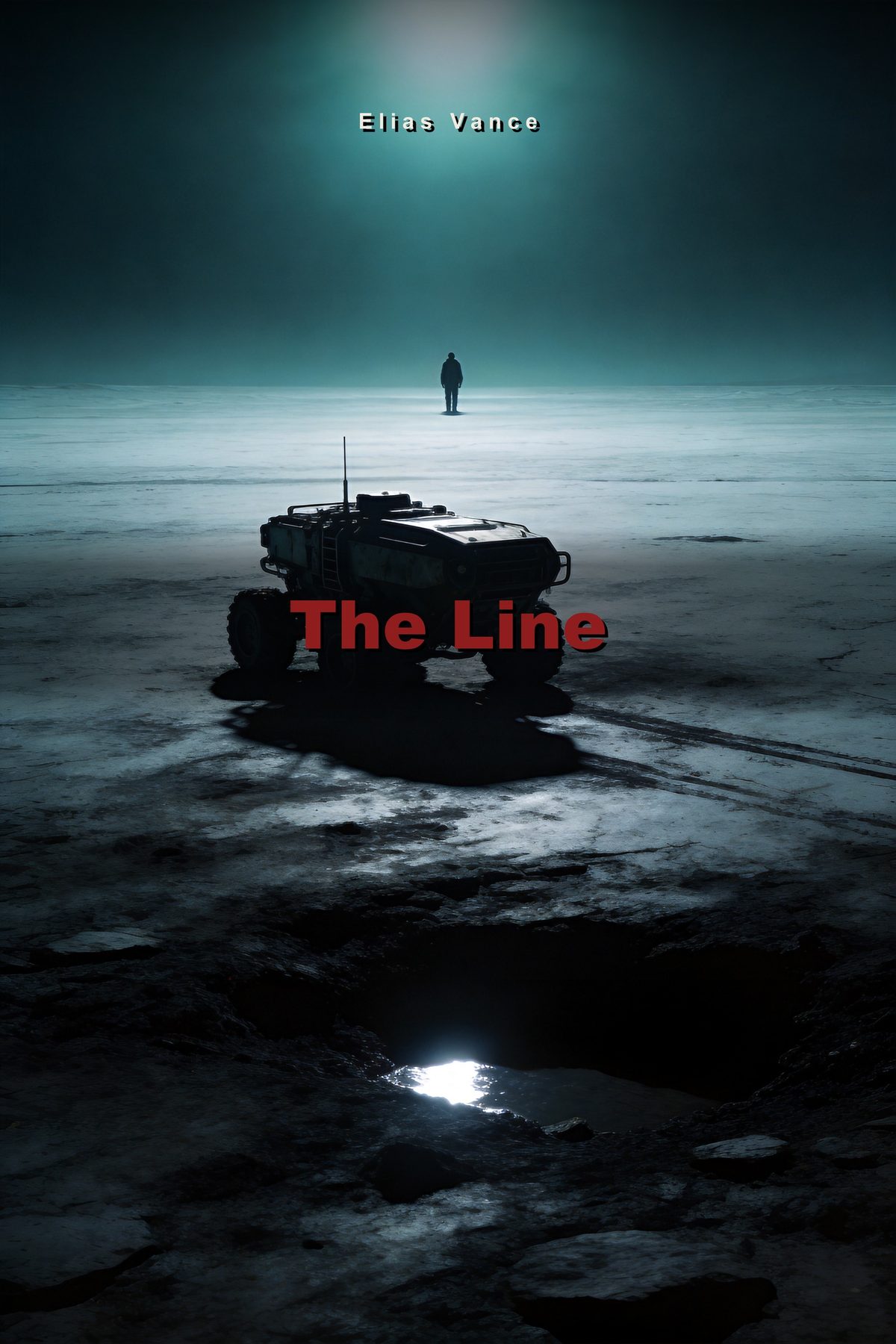
Rule one: do not leave the line.
The card is in my hand. I do not remember taking it from my pocket. I do not remember putting it there. I remember only the warmth of it against my fingers, the particular heat of something held for a long time by someone else, the way a stone holds the sun after the sun has gone. The lamination is smooth at the center and rough at the edges, worn to a soft white fringe where the plastic has begun to separate from the paper beneath. The print is small and even, black on white, the kind of type pressed into paper by a machine that no longer exists. There is no title. There is no explanation. Only the number one, and the words beneath it.
The card measures three inches by five. I know this without measuring. The lamination is peeling at the lower right corner, just enough to catch the pad of my thumb, and I press it down, and it lifts again, and I press it down again, and it lifts. The back is blank. I turn it over. Rule one: do not leave the line. The words have not changed. I read them a second time, then a third, and the act of reading feels like something I have done many times before, in exactly this posture, at exactly this hour, with exactly this quality of light falling across my hands. The light is gray and even, the color of dishwater, the color of old newspaper. It comes from no particular direction. It simply is.
I am forty-one years old. I was born in the line. I was born in a place between two other people, my mother ahead of me and my father behind, or perhaps the other way around, and the first thing I heard was the sound of the line breathing, the long slow exhalation of people waiting. I have never questioned the line. I have never stepped out of it. I have never raised my voice above the low murmur that passes for conversation among the people who stand near me, and even that murmur is rare, and even that murmur is mostly the sound of fabric shifting, of weight being redistributed, of the small involuntary noises a body makes when it has been standing for a very long time. The line is the only thing that has ever been real. The rule seems sensible. Leaving would be unthinkable, like leaving your own skin, like stepping out of your own bones.
I put the card in my coat pocket. The lining of the pocket is soft with age, worn to a fine gray nap that catches against the card as it slides down. The card settles against my thigh with a faint weight. Above me, the sky is the color of dishwater, and the buildings on either side of the street have windows like closed eyes, and the yellow tape strung between the stanchions sags slightly in the middle, the way it has always sagged. I do not know how long I have been standing here. The line has not moved in my lifetime. I do not expect it to move now.
The man ahead of me has gray hair cut close to his skull. He wears a brown coat with a torn lining, and the tear is shaped like a small dark mouth, and I have stared at that tear for so many hours, so many days, so many years, that I know its exact dimensions, the way the threads have frayed at the top edge, the way the darker fabric beneath shows through. I have stood behind this man for as long as I can remember. His shoulders are narrow. His neck is bent slightly forward, as if he is listening for something, as if the something is very far away and very quiet, and he has been listening for it for so long that his body has forgotten how to straighten. He does not speak. He does not turn. He is as fixed as a fence post, as fixed as the stanchions, as fixed as the buildings with their closed-eye windows.
Behind me, someone coughs. The sound is wet and far away, though I know the person is close, close enough that I could reach back and touch them if I wanted to. I do not want to. I do not turn to look. Looking has never occurred to me. The line is the line. The people in it are the people in it. We stand. We wait. The day moves over us like a slow hand, and the light changes by degrees so small that I cannot perceive them, and the shadows of the buildings stretch and retract and stretch again,
Subscribe to read the rest of “The Line”.
Get every story in the The Dark Threshold collection — and the entire library — for one monthly price. Cancel anytime.