The Quiet Ledger of Small Hours
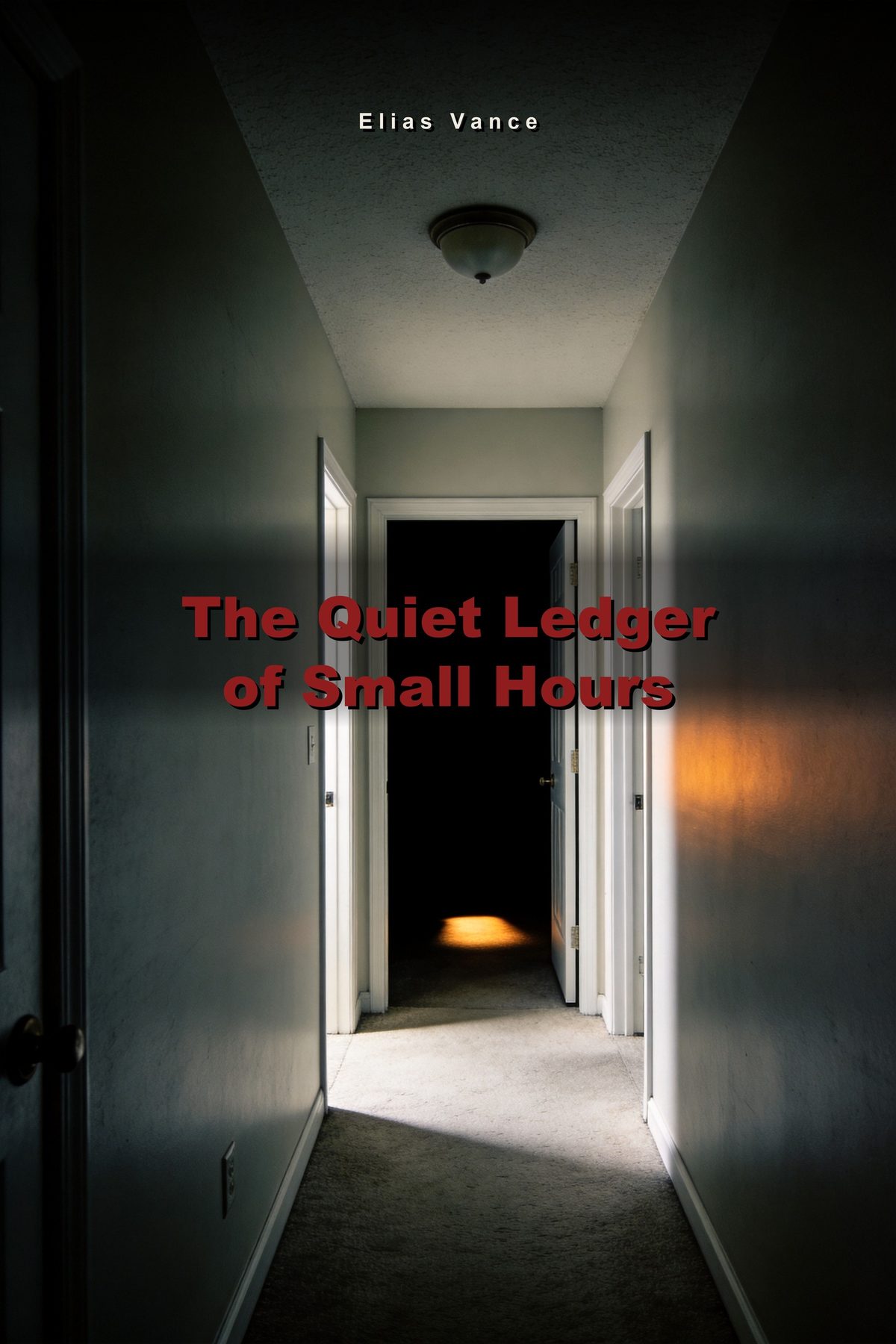
The hallway light was on, and that was the first thing I noticed. Not the fact of it—Daniel often left it burning when he went up to bed—but the dimness of it. The bulb had been turned, the little brass switch on the wall rotated to a point I had never used. It glowed the color of weak tea, just enough to see the staircase and the single sock lying on the third step from the bottom.
I had come in from the archive at eleven-forty, the smell of old paper still in my hair, and the house had that particular silence a house holds when someone has been asleep in it for an hour or more. My key turned, the door opened, and there was the sock. Gray wool, Daniel's, with the small darn at the heel I had put in myself last winter. It lay on the stair tread like a comma, and I picked it up without thinking, the wool still carrying the faint ghost of his cologne, something with cedar and a note of tobacco that he had worn since before we married. The kettle in the kitchen was warm when I passed it. Not hot. The kind of warmth that means it had boiled maybe twenty minutes earlier and no one had poured it. I ran my palm over the stainless curve of it, and the metal was just above room temperature, and I stood there in the half-dark kitchen with one hand on the kettle and one hand holding the sock, and I thought about how the hallway light had been turned to a setting I had never seen him use.
Upstairs, the bedroom door was ajar. Daniel lay on his side, facing my empty half of the bed, his breathing even and deep, the slow tide of a man who has been asleep long enough to dream. His right hand rested on the nightstand drawer, fingers loose but touching the brass pull, as though he had fallen asleep reaching for something. I watched his chest rise and fall. The room smelled of him, of us, of the lavender sachet my mother had sewn into my pillowcase years ago and that I had never had the heart to remove. I folded the sock twice and set it on the dresser beside his watch and his wallet and the small pile of coins he emptied from his pockets each night. Then I undressed in the dark and slid into bed, and Daniel did not move, and his hand stayed on the drawer pull, and I lay awake for a long time listening to the house settle around us, the floorboards ticking in the cold, the refrigerator starting and stopping two floors below, and I did not sleep until the sky had begun to pale at the edges of the curtains.
The next morning he was gone before I woke, which was not unusual. A note on the kitchen counter in his neat, small hand: Early start. Eggs in the fridge. Love you. The note was dated, and I noticed that the date was written twice, once in ink and once pressed into the paper as though he had written it on another sheet above and the impression had come through. I held the note up to the light. The ghost of the first date sat just beside the second, half a centimeter off, and I put the note down and made tea.
I did not go looking for the ledger. I have told myself this many times since, and I believe it. I was tidying his side of the closet, which I did every Thursday because he would not, and because I liked the ritual of it, the way his shirts hung in a row of pale blues and grays, the way his shoes lined up at the bottom like patient animals. I was matching socks, and I reached into the drawer where he kept them, the top left drawer of the built-in dresser inside the closet, and my fingers found something smooth and cool at the back, behind the rolled socks. Leather. I pulled it out.
It was a ledger, the kind I had seen in the archive, old-fashioned and heavy, bound in dark brown leather with a spine that cracked softly when I opened it. The pages were thick, cream-colored, ruled in faint blue lines. The first pages held lists. Groceries, mostly, in his hand, the letters small and careful. Milk, butter, eggs, coffee, chicken thighs, dish soap. Then a list of errands. Pick up dry cleaning. Call plumber about upstairs sink. Oil change Tuesday 8am. I turned the pages. The lists gave way to something else, and the handwriting changed, became looser, the letters larger, as though he had written these pages
Subscribe to read the rest of “The Quiet Ledger of Small Hours”.
Get every story in the The Dark Threshold collection — and the entire library — for one monthly price. Cancel anytime.