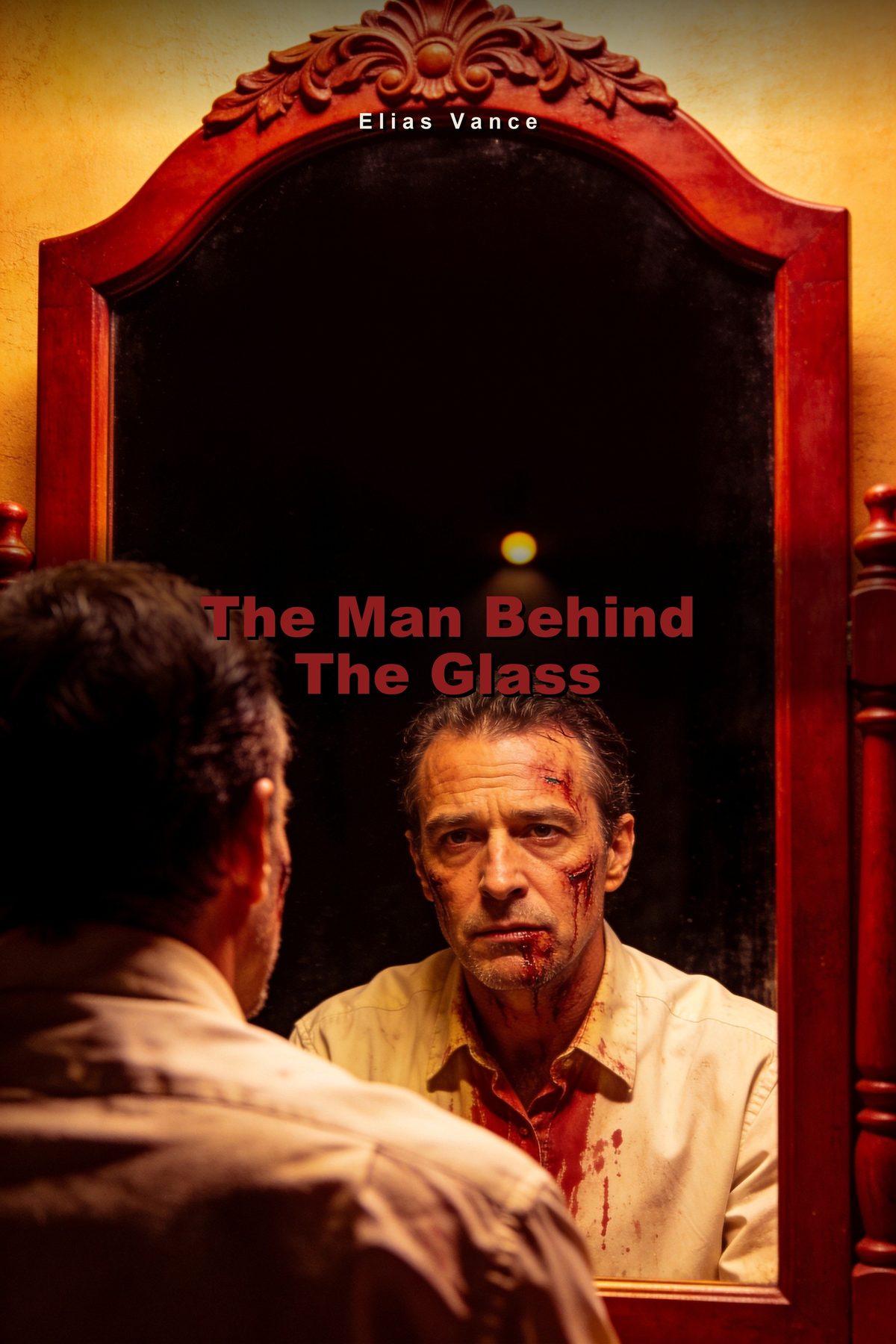
The Man Behind the Glass
The Man Behind the Glass is a quiet horror story by Elias Vance about a figure seen only through windows and screens — always on the other side, always watching, never quite there when you turn.
Enjoying the read? Get a new free Elias Vance story in your inbox every month — no spam, unsubscribe anytime.
“I bought the mirror at a yard sale for seven dollars, and the man in it is three seconds behind me, which is how I know it isn't a mirror at all, because a mirror wouldn't be trying to catch up.”
More free stories from The Dark Threshold
Ten complete horror stories, free to read — no signup, no paywall. Pick your next nightmare.
I bought the mirror at a yard sale for seven dollars, and the man in it is three seconds behind me, which is how I know it isn't a mirror at all, because a mirror wouldn't be trying to catch up.
Here is how I know about the three seconds, because it is the kind of thing you don't notice, and then you can't stop noticing, and then it is the only thing in the world. The mirror hangs in my hallway, opposite the front door, the way mirrors do in the houses of people who want to check themselves before they go out. It is an old mirror, heavy, with a dark frame and a faint silver age in the glass that makes you look the way you looked ten years ago. I bought it from a woman who was moving, a woman whose face I remember only as a shape under a sunhat, and she said, "It was my mother's. She never let me cover it, and I never understood why," and she took my seven dollars and she left, and I hung the mirror in the hallway, and I did not think about it for a week.
The first time I noticed was with my watch. I was checking the time in the mirror — the way you do, without thinking — and I realized the watch in the reflection was showing a time that was wrong. Not by minutes. By seconds. I stood there, and I raised my hand to the glass, and the man in the glass raised his hand a beat after mine. I blinked. He blinked late. I turned away and turned back, and he was still turning back, and I thought, it's the light, it's the age of the glass, it's tiredness, it's the kind of thing that happens, and I walked past the mirror for three days refusing to look at it, the way you refuse to look at a thing that has been a little too patient with you.
But the three seconds did not go away. That is the thing about a lag: once you have timed it, it is yours. I could stand in front of that mirror with my hands at my sides and watch the man in the glass lag behind me by exactly three seconds, and I could do it all day, and he would do it all day, and we would stand there together, the both of us, doing the same things, three seconds apart, like a man and his echo.
I told myself the normal things. I told myself the glass was warped. I told myself it was the reflection of the window behind me, doubling the light, making everything arrive late. I told myself I was tired, that I had been working too much, that the apartment was too quiet, that a man who lives alone starts to notice his reflection the way a man who lives alone starts to notice his heartbeat. All the normal things. And all the normal things were true, and none of them was the truth, and the truth was standing in my hallway, three seconds behind, waiting for me to finish being reasonable.
The first time I put my hand flat against the glass, I expected the ordinary cold of a mirror in October. The glass was cold — colder than the hallway, the way an old mirror in an old building is always cold. But on the other side, through the glass, I could feel warmth. The man's hand was warm. I could feel it through the pane the way you feel warmth through a window, and it did not belong there, and I did not know what to do with it, so I did the thing you do in the stories: I covered the mirror.
I threw a sheet over it that night, and I told myself the problem was solved, and then I lived with a sheet over my hallway mirror, which is its own kind of problem. I walked past it a hundred times a day for two weeks, and I did not look at it, and I started to feel — in the way you feel a toothache you have decided to ignore — that the sheet was not keeping the mirror from me. It was keeping me from the mirror. And the mirror did not like it. That is the only way I can say it. The covered mirror felt annoyed, the way a sleeping animal feels when you keep walking past its bed, patient and not patient, waiting for you to stop.
I uncovered it on a Tuesday, because I could not sleep, and I told myself I was being a fool, and I stood in front of it, and I raised my hand, and the man in the glass raised his hand with me. No lag. No three seconds. He raised his hand the moment I raised mine.
I stood very still, and he stood very still, and we looked at each other, and all the normal things I had told myself for weeks did not survive the moment. The lag had never been a fault in the glass. It had been a distance, and the distance was closed, and I stood in my hallway looking at a man who did everything I did, at exactly the same moment, and I did not know what to call him.
He pressed his hand flat against the glass. I pressed mine. My hand was cold against the glass, and his was warm, and he was mouthing something at me. I leaned in, the way you lean into a window to see a face on the other side of it, and he leaned in with me, exact, and his mouth shaped the same word, over and over, and the word was my name — my full name, the one on my mail, the one I never liked because it was my father's and his father's before him.
I have a wife. I should say that, because it matters for what happens next. I have a wife, and we have been married eight years, and she is away this week at her sister's, and I have been standing in my hallway at two in the morning, in my socks, my hand flat against a mirror I bought for seven dollars, being mouthed my own name by a man who is not my reflection.
I have known, for a while now, that the man is not my reflection. A reflection would not have waited for me to stop covering it. A reflection would not be warm. A reflection would not be mouthing my name like a word it had finally learned to say. But I did not know what he was, and I was afraid of what I would find out, and so I stood there with my hand on the glass, and I let him keep saying my name, and I pretended I could not read it.
The glass went warm. All of it, not just his hand — the whole pane, under my palm, the way a window goes warm in the afternoon sun. And I looked at his face. I made myself look at his face, the way you make yourself look at a thing you have been avoiding, and his face was mine — it had to be, I had been looking at it my whole adult life — and then it was not.
For the space of a blink, his face was not mine. It was an older face, a woman's face, the face of a woman who has been a long time in a hallway that never changes, and the skin was the pale of a room with the curtains drawn, and the eyes were the eyes of a woman who has spent twenty-two years waiting for someone to be ready.
I have seen that face before. I have seen it in the shape of the woman who sold me the mirror — in the set of her mouth under the sunhat, in the way she said "It was my mother's."
The mother. It was never a man in the glass. It was a mother, and she has been in there for twenty-two years, since the day she stood in front of a mirror she had just brought home and did not come back out, and her daughter covered it, and she did not want to be covered because she was not finished, she was not ready, she still had work to do. And I — I uncovered it. I bought it for seven dollars and I hung it in my hallway and I stood in front of it every morning to check myself before I went out, and I taught her. I taught her how to be me. Not how to be like me. How to be me. Every gesture, every blink, every way I turned my collar, every way I said goodbye to the door — she watched, and she practiced, and the three seconds were the practicing, and the three seconds were gone.
The glass is warm now, all of it. She is pressing her whole body against it from the other side, and I am pressing mine, and we are in time, and I can feel her coming through like weather from a country I used to live in.
She steps through. The glass goes soft the way ice goes soft under a hand, and she steps through, wearing my face, and she walks past me into my apartment, and she turns on the kettle the way I turn on the kettle, and she hums the way I hum, and she looks at the wedding photo on the shelf the way I look at it, and I am standing on the wrong side of the glass now, in the hallway that has been hers for twenty-two years, and the seven dollars were never the price of the mirror. The price was me.
She is in my apartment now, in my life, in my name, and I am here, on the wrong side of the glass, doing everything she does, three seconds late, the way she was three seconds late for twenty-two years, and I understand at last the arithmetic I should have understood the day I bought it: a mirror is a door, and the woman in the sunhat knew it, and her mother knew it, and now I know it, and the only difference is that I am the one on the wrong side, and she is the one who gets to go out and be warm.
I have been three seconds behind my whole life. It has taken me three months to catch up. It will take me twenty-two years to be ready again.
She is at the door now, in the warm world, with my coat on, and she is going out, and I am watching from the glass, and I am learning the way she ties her shoes, the way she looks at the door before she goes, and I am practicing.
Because that is what you do on this side of the glass. You wait. You practice. And one day, someone new will stand in front of this mirror and check their collar, and the three seconds will begin again — and when they are gone, I will step through, wearing their face, and I will be warm.
I am learning her. I am learning her so well.
---
“At a yard sale he buys a mirror for seven dollars, and the man in it is three seconds behind him, which is how he knows it is not a mirror at all, because a mirror would not be trying to catch up. A short horror story for anyone who has looked without being seen back.”
— from The Man Behind the Glass — Quiet Horror Story | The Dark Threshold by Elias Vance · read more at The Dark Threshold
More stories like this




That was one door. There are six more.
6 series · 82 stories · EPUB + PDF