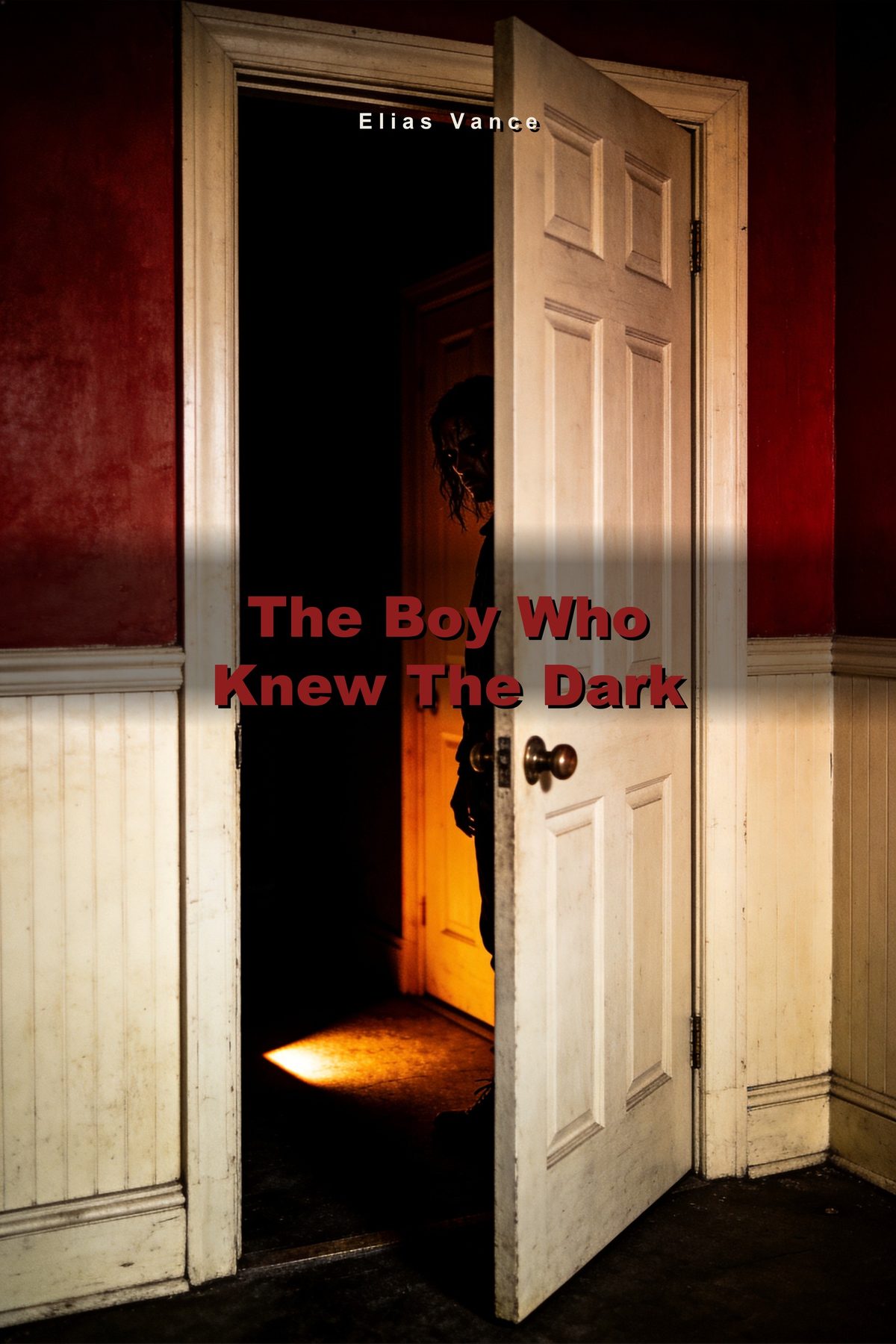
The Boy Who Knew the Dark
The Boy Who Knew the Dark is a quiet horror story by Elias Vance about a child who is not afraid of the dark at all — and the reason he gives for why should trouble anyone who hears it.
Enjoying the read? Get a new free Elias Vance story in your inbox every month — no spam, unsubscribe anytime.
“I opened my door at 2 a.m. to the boy who used to live in my closet, and he was exactly the age he was when I last saw him, which was twenty-nine years ago.”
More free stories from The Dark Threshold
Ten complete horror stories, free to read — no signup, no paywall. Pick your next nightmare.
I opened my door at 2 a.m. to the boy who used to live in my closet, and he was exactly the age he was when I last saw him, which was twenty-nine years ago, and he said, "You look like you've been keeping them out all by yourself."
I should not have opened the door. That is the first thing, and I say it plainly: I am a woman who does not open doors at 2 a.m. I check the peephole. I keep the chain on. I have lived alone for nine years in this apartment, and I have a list of things I do not do, and answering the door in the small hours is on it, right at the top. But the knock was not a stranger's knock, and the voice on the other side was not a stranger's voice. It was a child's. And it said my name — my childhood name, the one I stopped answering to when I was eleven, the one that belongs to a girl who lived in a house with a closet door that did not always stay shut.
So I opened the door, and there he was.
He was a boy of nine, standing in the fluorescent hum of the hallway, wearing the same blue sweater he wore in every memory I have of him. His hair was the same too-short cut, the same cowlick that never lay flat, the same serious, patient face. He looked at me the way he used to look at me — the way you look at someone you have been waiting for — and he was dry, and the hallway was dry, and it had been raining for three days, and the carpet behind him should have been soaked.
He said, "You look like you've been keeping them out all by yourself."
I have thought about him a lot, over the years. That is the thing about an imaginary friend — you never really stop knowing he is there, even after you stop believing. His name was Marcus, and he came to me when I was six, in the year the closet door started bothering me. I have never told anyone the full story of that year, because the full story is the kind of thing you keep, the way you keep a bruise, pressed against you. The short version is: I was afraid of the dark, the way children are, and then I was afraid of the closet, which is less normal, and then I was afraid of the thing in the closet, which is the part you don't tell adults, because adults will tell you the dark is nothing, and the dark is not nothing.
Marcus came to me in the middle of one of those nights. He was sitting on the end of my bed, neat as a new penny, and he said, "I'll keep them out for you, if you let me stay." And I let him stay, because I was six, and he was the first thing that had ever promised to keep the dark out, and the dark had been getting in.
He was good at it. That is the terrible part. He was very, very good at it. He stood in the doorway of the closet, sometimes, and he would talk to the inside of it in a low voice, the way you talk to an animal you are trying to calm, and the thing in the closet would go quiet. He would sit on the floor by my bed when the lights were off, and he would hum, and the hum was the sound of the house being safe. He kept them out. He kept all of them out. And I slept, and I grew, and when I was eleven I moved into a room with a lock on the closet door, and I stopped being afraid, and Marcus stopped coming to the end of my bed, and I told myself I had outgrown him, which is the polite thing you tell yourself when something that loved you finally goes away.
I have been keeping them out by myself for twenty-nine years. That is the truth of my adult life, and I have never said it out loud. I sleep with the light on. I check the closets, all of them, every night, and I tell myself it is a habit, and it is not a habit, it is a job. I have done this job so long that I have forgotten there was ever anyone else who did it. I have a therapist, and I do not tell her about the closets, because the closets are not a thing you can explain to a person who has never stood in a dark room with a door that will not stay shut.
And now Marcus is standing in my hallway, unchanged, twenty-nine years older than a boy who should not exist, and he is looking at me with the same patient face, and he is saying, "You look like you've been keeping them out all by yourself."
I let him in.
I do not know why I let him in. I think it is because I have been keeping them out for twenty-nine years, and I am so tired, and he is the only person in the world who has ever offered to do it for me. He came in, and he stood in my living room, and he looked around at my grown-up things — the books, the plant, the sofa I bought, the life I built — and he nodded, the way you nod at a room you recognize.
He said, "It's nice. You did well. You built it safe."
"I built it," I said, and my voice sounded small.
"You built it," he agreed. "And you've been keeping them out. All by yourself." He said it again, and this time I heard what he was really saying. He was not praising me. He was marveling. He was looking at me the way you look at a thing that should not be able to stand, and is standing anyway, and he was genuinely, terribly impressed.
"Why are you here, Marcus?" I asked. "It's been twenty-nine years."
He was quiet for a moment. The apartment hummed its quiet hum — the fridge, the pipes, the particular silence of a place where one person lives alone. And then he said, "Because you started calling me back. Not with your voice. You wouldn't do that. But you've been leaving the door ajar, haven't you? Not on purpose. Just a little, at night. So you can hear them, and know they haven't got in. You've been leaving it ajar on purpose, and you didn't even know you were doing it."
I have. I have been doing exactly that, for years, without ever letting myself see it. The closet door in my bedroom — I leave it open an inch. I leave it open so I can hear if anything moves in there, so I can be the one who knows, so I can keep them out on purpose. I have been keeping them out so long that I have started, without noticing, to keep them company.
"Listen," Marcus said, and his voice was gentle, the way it used to be, and that was the worst thing of all, because gentle was the voice he used on the closet. "You're tired. You've been doing a job that was never meant for one person. I can do it for you again. I can keep them out. You just have to let me stay."
And I looked at him — this boy, this impossible boy, this thing that loved me and protected me and waited twenty-nine years at the end of my bed — and I wanted to say yes. I have never wanted anything so much. I wanted to hand him the door and lie down and sleep, and not have to check the closets, not ever again.
But I am forty years old, and I have been keeping them out by myself for a long time, and there is one thing I have learned, in all those years of dark rooms and doors that will not stay shut. It is the only thing that kept me safe. It is the reason I am still here, standing in my own living room, talking to a boy who should not exist.
I said, "Marcus. What are you keeping out for me?"
He did not answer. For the first time since he knocked, his face was not patient. It was careful. It was the face of a thing deciding what it is safe to say.
And I understood.
I could tell you that I was wrong. I could tell you that I said something brave, and that he nodded, and that he left, and that I closed the door and went back to my grown-up life and my grown-up closets and my grown-up, careful sleep. I could tell you that the horror of the thing I was about to realize did not happen, that I stayed the woman I built, that I did not, in that bright terrible moment, see the whole of my childhood rearranged.
But I saw it. I saw it all at once, the way you see the pattern in a carpet only after you have been staring at it for years.
Marcus was never protecting me from the dark.
He was protecting the dark from me.
I have been telling myself a story for thirty-four years, and the story was that the thing in the closet wanted to get out, and Marcus stood between us and kept it in. But that is not what was happening. That is not what was ever happening. The thing in the closet was afraid of me — of the girl who refused to look away, who built a wall of wakefulness, who learned to be braver than any child should have to be. It was the thing in the closet that was hiding. It was the thing in the closet that needed Marcus to stand in the doorway and calm it, night after night, year after year, while I slept, while I grew, while I became the one thing in this world that could have opened that door and walked into that dark and endured it.
Marcus was not my protector. He was the closet's.
He kept them out for me — yes. He kept the dark out of my childhood the way you keep a door shut. But the door was shut on the dark for the dark's sake. He was guarding the thing I would have had the strength to face, and he kept it away from me, and he kept me away from it, and he has been waiting, for twenty-nine years, for me to be too tired to notice the difference.
He held out his hand. He is still holding it out. He is standing in my living room, a boy of nine in a blue sweater, and he is saying, "Come on. I'll take you back. You've been keeping them out so long you forgot there was a door you were supposed to go through. I'll take you to the door. I'll open it for you. I've been saving it."
And I am looking at his hand, and I am so tired, and I have been so brave, and I have been keeping them out by myself for twenty-nine years, and the worst thing — the thing I will not survive telling anyone — is that I know he is telling the truth. I have been leaving the closet door ajar on purpose, for years, without knowing why. And it was not to keep them in.
It was to keep them company.
Because the thing in the closet is not in the closet anymore. It grew up, and it moved out, and it bought a sofa and a plant and a life high and dry, and it has been standing in its own living room for nine years, checking the closets every night, leaving the door ajar so it can hear the only sound in the world that ever made it feel safe: the dark, humming, on the other side of a door that does not quite stay shut.
Marcus is holding out his hand.
I am taking it.
I am sorry. I built it safe, but I was the one who kept leaving the door ajar, and he was the one who kept it safe for me, and now he is taking me back to the room I grew up in, and the closet door is open, and the dark is in there, waiting, humming, the way it hummed for me, and I am eleven years old, and I am six years old, and I am finally going to see what I have been keeping out of my own life for thirty-four years.
He kept them out for me. That was the job. That was always the job.
But he kept me out too. And I am going through the door now, and I am not coming back, and the only mercy I can give you is this: if you have a closet, and you leave the door ajar, and you tell yourself it is so you can hear them — do not let the boy back in. He is not yours. He was never yours.
He was the door's.
---
“In this dreamlike quiet horror story, the narrator opens his door at 2 a.m. to the boy who once lived in his closet, still the age he was twenty-nine years ago, still waiting. A story about childhood, memory, and the dark we never quite outgrow.”
— from The Boy Who Knew the Dark — Quiet Horror Story | The Dark Threshold by Elias Vance · read more at The Dark Threshold
More stories like this
That was one door. There are six more.
6 series · 82 stories · EPUB + PDF